


The Internet is becoming a prominent source for information nowadays. It is likely that a majority of households no longer have dictionaries and thesauruses because it is so easy to access these tools online. However, it is important for children to learn how to properly use a dictionary to attain the proper spelling and accurate definitions of words. Because dictionaries in homes are not as common as they once were, a teacher must start with the basics when it comes to teaching children proper dictionary use.
How to Teach Children to Use a Dictionary
Make sure your students are fluent with the alphabet. Fluency involves more than being able recite the alphabet; students must know it so well that they can easily tell you the two letters that come before and after any given letter of the alphabet. You can help your students become fluent by giving them a number of exercises where they have to put certain words in alphabetical order. You could also give them random letters and have them list the letters that come before and after. You can easily create worksheets for these activities by typing the word or letter and leaving a line or space for the students to fill in the answers.
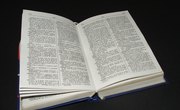
Give each of the students a dictionary, or let them share dictionaries if your resources are limited. Let them have time to explore the dictionaries and get a feel for them.
Explain to your students about the presence of guide words on each of the dictionary pages. These words help indicate word's starting and ending point on any given page. Have the students take turns leafing through the dictionary and reciting different guide words that they see.
Hand each of your students a list of different words for them to look up in the dictionary. Tell them that you want them to write out the definition of each word, the page number where they found the word and the two guide words that helped them find the word they were looking up.
Make the task of looking up words a little more difficult once your students have mastered their first list of words. You could choose words that have the same first two letters and show the student that they have to pay attention to all the letters in the word. You also could give them sentences and have them list the definition of a word from the sentence that goes best with the sentence context.
Related Articles





References
Writer Bio
Based in Orlando, Fla., Michaela Davila has been writing poetry, short stories, resumes and advertising materials for years. She has recently been published in the Dollar Stretcher and Devozine. Davila has a bachelor's degree in business administration from Elon University and is a Board Certified Associate Behavior Analyst.