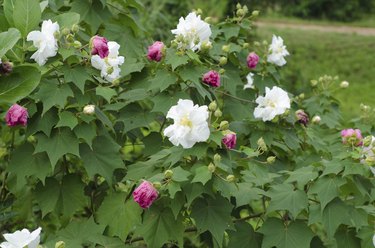
Best grown as a perennial in U.S. Department of Agriculture plant hardiness zones 7 through 9, the confederate rose (Hibiscus mutabilis) features large, showy flowersthat can be single or double. Some start off white but quickly change to deep pink or reddish pink, with a blueish cast near the end of their bloom cycle. Especially enchanting is the fact that these cycles happen on different parts of the large bush simultaneously, so that the plant appears to feature multi-colored blooms. Despite its name, the confederate rose is actually a hibiscus and not a rose.
Things You'll Need
Compost
Mulch
Soaker hose or drip-irrigation system
Bleach or rubbing alcohol
Paper towels
Video of the Day
How to Grow a Confederate Rose
Step 1: Choose a Planting Site
Choose the planting area for a confederate rose, ensuring it receives full sun or dappled shade in the hotter part of its range. The confederate rose is best grown as a large shrub, but if it's planted in a border, it should have at least 5 feet spacing on either side.
Video of the Day
Step 2: Prepare the Planting Site
Prepare the planting area by amending the soil. Although confederate roses adapt well to most soil conditions, working a 2-inch layer of compost into the soil will help improve the nutrition and texture of the soil. Work the compost about 12 inches deep throughout an area that's about 100 feet square.
Step 3: Dig the Hole
Dig a hole that is about the depth of the shrub's root ball and at least twice as wide. Set the confederate rose in the hole, and backfill the hole with soil. Press down on the soil to remove air pockets, and water the area deeply.
Step 4: Mulch the Plant
Mulch the area around the confederate rose with a 2-inch layer of wood chips or other organic material. Keep the mulch several inches away from the base of the shrub itself.
Step 5: Provide Early Moisture
Check the soil around the confederate shrub daily in the first few month after planting. To get them off to the best start, young shrubs need consistently moist soil during their first growing season.
Step 6: Water the Confederate Rose Consistently
Water about every two weeks as the confederate rose matures. Shrubs should be watered to a depth of about 2 feet. If you're not able to water as often or as deeply as recommended for shrubs like the confederate rose that prefer moderate watering, take heart. Established confederate roses are somewhat drought tolerant, although they may experience some wilting in scorching heat and no water.
Step 7: Prune Confederate Roses
Prune the confederate rose, if size is a concern. Many gardeners only lightly shear the shrubs for a more even silhouette. It's possible, however, to cut a confederate rose to a height of 12 inches during dormancy, which will allow it to grow to a moderate and bushier height the following season. Sterilize the shears before pruning by wiping the blades with rubbing alcohol.
Step 8: Add Compost in Spring
Spread a 1- to 2-inch layer of compost around the shrub each spring, starting from a few inches away for the base to under the plant's outermost branches. This action will continue to improve the growing environment as the confederate rose matures.