eHow launches Android app: Get the best of eHow on the go.

How To

How to Grow Roses from Tip Cuttings

Contributor
By eHow Contributing Writer
(38 Ratings)

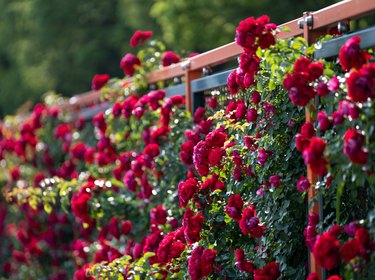
Roses are one of the easiest plants to propagate from cuttings. Now you can share your favorite rose bush with friends and neighbors and enjoy the easy process of making tip cuttings.

Difficulty: Moderately Easy
Instructions

Things You'll Need:

  1. Step 1

    Prepare your potting medium by placing fresh potting soil in a small, clean 4-inch plastic nursery container. Water the soil well, then set the prepared pot to the side.

  2. Step 2

    Select a healthy rose plant you wish to propagate. The plant should be blooming, well-watered and have no sign of insect infestation, fungus disease or stress.

  3. Step 3

    Cut a section of stem 6-10 inches long. The ideal piece should have at least one flower bud that is almost ready to open and several mature leaves growing along a straight section of stem.

  4. Step 4

    Remove the lower leaves so that 2-3 leaf joints are visible on the stem. The leaf joints are where the roots will form. The leaves will pull away from the stem easily by hand.

  5. Step 5

    Dip the cut end of the tip cutting into a rooting hormone to encourage rapid rooting. Only the area of the stem which will be under the soil should be treated with rooting hormone.

  6. Step 6

    Use a pencil to poke a hole into the prepared pot. Most gardeners who make tip cuttings poke a hole rather than just pushing the cutting directly into the potting soil to avoid damaging the delicate cambium layer along the stem. The cambium is the tissue that carries nutrients up and down the stem.

  7. Step 7

    Place the prepared cutting into the hole, then firm the soil around the stem so that it is secure in the pot. Use your finger tips to press the soil gently around the base of the stem.

  8. Step 8

    Place the prepared cutting into a large plastic bag. The plastic bag will act as a miniature green house, retaining moisture and heat while the roots are forming.

  9. Step 9

    Seal the bag closed and place the cutting in a warm area away from direct sunlight. Although some light is necessary, direct sun will cook the cutting inside the bag.

  10. Step 10

    Open the bag and mist frequently to keep the moisture level elevated. Because the little plant does not have roots yet, it can't pull up water from the soil. Keep the inside of the bag humid and moist without over-watering. Reseal the bag when you are finished misting.

  11. Step 11

    Remove the greenhouse bag after 3-4 weeks, depending on the season. The little plant should have begun to develop roots by this point. Continue misting daily or whenever the soil feels dry to the touch being careful to avoid over-watering.

  12. Step 12

    The plant is ready to live on it's own when you begin see new growth and roots coming from the bottom of the pot. Congratulations!

Tips & Warnings
  • Leaf joints are the visible scars on the stem where the leaves grow. Even after the leaf has been removed from the stem, a leaf scar and new bud are evident.
  • Rooting hormone is available at garden centers and nursery supply stores, or you can make your own from willow bark tea.
  • Turkey roasting bags make excellent temporary greenhouses. They are durable and can be washed and used again and again.
  • Misting inside the greenhouse bag every other day should be adequate.
  • Cuttings will root faster in the early spring.
  • Do not use clippers to cut the leaves off the stem. The remaining stubs will rot and cause your cutting endeavor to fail.
  • Keep all of your tools and work surfaces sterile by using a 10% solution of bleach to prevent disease.

Comments  

Flag This Comment

on 9/28/2009 Thanks so much for this article. I tried it on one of my rose plants and just one week later my cutting has new little leaves.
I put a stick in the pot to keep the bag from collapsing and I put two or three blocks of ice in the pot instead of misting.

xp2929b said

Flag This Comment

on 9/11/2009 I want to know when is best time to do that?

Post a Comment

Post a Comment
  • Have you done this? Click here to let us know.
I Did This

Related Ads

Tags
Home & Garden
Ruby Bayan,

Meet Ruby Bayan eHow's Home & Garden Expert.
Get Free Home & Garden Newsletters

Copyright © 1999-2009 eHow, Inc. Use of this web site constitutes acceptance of the eHow Terms of Use and Privacy Policy.   en-US Portions of this page are modifications based on work created and shared by Google and used according to terms described in the Creative Commons 3.0 Attribution License.

eHow Home and Garden
eHow_eHow Home and Garden