Tip
Make every effort to allow your borrower to catch up on past-due payments before resorting to repossession. If the borrower cannot make her payments, she will not likely pay the loan balance and fees after repossession. You may have to file a civil suit to try to recover these amounts. Send the notice of default even if your state does not require it. Not all states provide the borrower with a period to cure the default; however, sending this notice shows that you have made every effort to allow the borrower to keep the vehicle.
Warning
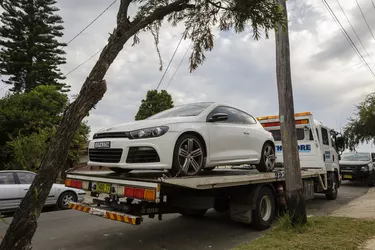
Avoid trying to repossess the vehicle yourself unless you have extensive training and experience. Vehicle repossession is a potentially dangerous task, and can also result in fines if you breach the peace or otherwise violate your state's repossession laws. Also, repossession typically requires special equipment, such as a tow truck and lockout tools, that make repossessing a vehicle yourself prohibitively expensive.
If you have sold a vehicle to a private party on an installment basis, the purchaser's right to possession of the vehicle depends on making timely payments in accordance with the contract. If the customer misses a payment, he has defaulted on the loan, and you have the right to repossess the vehicle. Legal vehicle repossession requires following specific steps and procedures to repossess the vehicle properly.
Notice of Default
Video of the Day
Step 1
Review your state's vehicle repossession laws. Each state imposes different requirements regarding notification to the borrower before repossession, as well as on the procedures followed to repossess the vehicle.
Video of the Day
Step 2
Compose a notice of default identifying the name and address of the borrower and the vehicle identification number of the vehicle in which you hold a security interest. State in the letter that you have contacted the borrower to attempt to cure the default, and that the borrower has not voluntarily paid past-due loan amounts. Document the exact amount past due as of the date of the notice of default.
Step 3
State a future date by which the borrower must pay all past due amounts to bring the loan current, and indicate that if the borrower pays the past-due amount, the loan will continue as though the default had not occurred.
Step 4
Explain in the notice of default that if the loan is not brought current by the specified date, you have the right to engage in collection activities, including involuntary repossession of the vehicle.
Step 5
State in the letter that the amount due may include payments that become due between the date of the letter and the final date for payment of the past-due balance.
Step 6
Mail the letter via certified mail so you will have documentation that the borrower received the notice of default. Keep the confirmation and a copy of the notice for your records.
Repossession Order
Step 1
Compose a repossession order if the borrower has not brought the loan current by the date indicated in the notice of default. Include your contact information, as the lender and owner of the vehicle, and the customer's information as the borrower. Detail the vehicle identification number, year, make and model in which you hold a security interest.
Step 2
Write in the repossession order that the borrower has not cured the default, and that you are exercising your right to repossession of the vehicle.
Step 3
List all charges to the borrower, including the remaining balance of the loan, repossession fees and storage fees. Indicate your right to impose additional charges for damage to the vehicle found after repossession.
Step 4
State that you and your repossession agent are not liable for any damages, other than those caused by negligence, that occur during repossession, transport or storage of the vehicle. Provide the location where the vehicle will be stored, so the defaulting borrower can collect personal belongings from the vehicle and exercise her right of redemption, if applicable.
Step 5
Take the repossession order to a notary public and have it notarized. Keep a copy of the notarized order for your records.
Vehicle Repossession
Step 1
Contact a repossession agent in your area to perform the repossession. If you cannot locate a repossession agent, contact local banks, automobile dealerships and "buy here, pay-here" lots to obtain a repossession agent's contact information.
Step 2
Provide the repossession agent with a copy of the notarized repossession order, as well as a copy of the title showing that you are the legal owner of the vehicle.
Step 3
Pay the repossession agent his fee for performing the repossession. Fees vary considerably in the repossession industry; however, $300 to $600 is typical for a private repossession, at the time of publication.