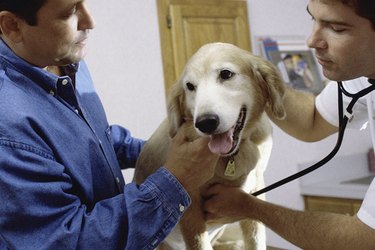
Heartworm disease is a medical condition that arises due to the presence of Dirofilaria immitis, parasites. These parasitic nematodes reside within both the pulmonary arteries and heart. Some dogs see the veterinarian with intense forms of the disease, and others milder versions. Many factors determine the degree of heartworm disease, but in all but the worst cases, it's curable.
Heartworm
Video of the Day
Video of the Day
Heartworm can bring upon lots of major health problems in animals, including cardiac failure and lung disease. It can be deadly. Canines can get heartworm disease through a simple carrier mosquito bite. As soon as the bite takes place, the parasiote larvae make their way into the canine's bloodstream and develop. They become mature in the blood vessels and heart, where they breed and welcome microfilariae in six to seven months.
Symptoms
Heartworm disease can bring upon many symptoms. Some common signs are weight loss, vomiting, difficulty breathing, low energy, exhaustion and coughing, sometimes with blood. However, some dogs show no hints of a problem until the disease has progressed greatly. It is crucial to take your dog to the veterinarian as soon as you notice any symptoms at all. Routine veterinary appointments are also always a must, even if your pet seems to be in perfect health.
Recovery
Dogs can indeed recover completely from heartworm, although the degree of the ailment has a lot to do with outcome. The disease exists in three phases. The initial phase is devoid of symptoms. Canines in this stage generally have not experienced any havoc on their organs and therefore recover just fine with veterinary management. The second phase involves some symptoms, but not major ones. With veterinary care, Dogs with phase 2 heartworm, too, can often bounce back fully. The third phase of heartworm disease is much more intense. Veterinary management options could lead to additional difficulties, and dogs in this situation also often have serious issues with the liver, lungs and heart, for a few examples. Canines in this state frequently pass away within weeks.
Prevention
One thing that beats a full recovery from heartworm is your precious dog never having it in the first place. Topical and oral forms exist. Speak to your veterinarian about what's most appropriate for your dog. Prevention is particularly important in certain regions of the country, but vets recommend preventive heartworm treatments year-round, nationwide, regardless of climate.
By Naomi Millburn
References
American Heartworm Society: Canine Heartworm
PetMD: Heartworm Disease in Dogs
Animal Planet: What Are the Symptoms of Heartworm in Dogs?
VCA Animal Hospitals: Heartworm Disease in Dogs
North Shore Animal League America: Protect Your Dog From Heartworm
American Society for the Prevention of Cruelty to Animals: Heartworm
U.S. Food & Drug Administration: Heartworm Disease - What Is It and What Causes It?
Oconee County Humane Society: This Dog Is Heartworm Positive...What Does This Mean?
Naomi Millburn has been a freelance writer since 2011. Her areas of writing expertise include arts and crafts, literature, linguistics, traveling, fashion and European and East Asian cultures. She holds a Bachelor of Arts in American literature from Aoyama Gakuin University in Tokyo.