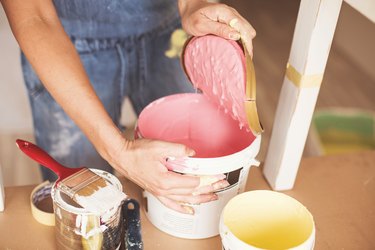
A glaze is a mixture of paint and a paint additive that produces a translucent or semitranslucent coat of color. When applied to walls, furnishings, and canvases, the base coat shows through, lending depth, movement, and luminosity to your craft, art, or home improvement projects.
Different from just thinning acrylic paint with water-based acrylic, or oil paint with mineral spirits (which merely dilutes the pigment), combining a glaze medium with paint alters the consistency and viscosity (thickness), giving it more body. This is why paint glaze is commonly used in faux finishing (rag rolling, cheesecloth, color washing, etc.). It's also a great way to achieve visual effects that mimic the look of marble, Venetian plaster, or aged patina. Because adding glaze to paint slows down the drying time, it offers greater flexibility and control over the finished product. Mixing your own homemade glazes will not only give you the results you want but will allow you to save money too.
Video of the Day
Video of the Day
Things You'll Need
Rubber gloves
Sealable container or screw-top jar
Stir stick
Drywall sample
How to Make Paint Glaze
Step 1: Figure Out the Formula
Determine approximately how much glaze you need to complete your project. Paint glaze tends to go much further than paint on its own; therefore, if a gallon of paint covers a 300-square-foot room, you can figure that if you mix a gallon of additive with 16 ounces of paint, you'll have enough paint glaze to faux paint two rooms instead of one. Of course, the amount you need will depend on several factors, such as the thickness of the glaze, whether you will be applying a light or heavy layer of paint glaze, and the type of paint sheen the glaze is lying over. (Keep in mind that flat/matte paint on the wall will absorb more glaze than shinier finishes, like satin, semigloss, and high gloss.)
Step 2: Blend Paint and Additive
Put on a pair of rubber gloves and shake the bottle of additive well. Also stir the paint well in its can. Pour a measured amount of paint into a clean jar. Add a measured amount of additive to the paint, following the ratio recommended by the additive manufacturer. Stir the mixture well, using a stir stick, or screw the lid onto the jar and shake vigorously until the additive and paint are completely blended.
Step 3: Test the Glaze
Before you begin, do a trial with the glaze to make sure you have the right consistency (and technique). If you're going to glaze a wall, practice on a piece of painted drywall. Otherwise, try some in an inconspicuous area, such as the underside of furniture or inside a cabinet door. You can also experiment with glazes on small, inexpensive canvases found at arts and crafts stores.
Step 4: Adjust the Formula as Needed
If the paint-to-additive ratio doesn't seem quite right, adjust accordingly by adding either more paint or extra additive. Adding paint will make the glaze increasingly opaque while boosting the additive will increase the glaze's transparency.
Step 5: Write Down the Glaze Recipe
Once you've found the perfect formulation, jot down your homemade glaze recipe to have it handy for your next project. Now, get glazing!
Tip
Mix only the amount you need to avoid wasting product and having to store leftover glaze. If you find that you’ve run out of glaze before the task is complete, you can make more in minutes.
Warning
Be sure the space in which you’re working is well-ventilated, especially if you’re using an oil-based paint glaze. Whenever possible, set up outdoors or in the garage with the door open. Wear rubber gloves to avoid any contact with skin.