How To

How to Propagate Houseplants From Stem Cuttings

Contributor
By eHow Contributing Writer
(11 Ratings)

Propagating from stem cuttings is an economical way to add to your houseplant collection.

Difficulty: Moderately Easy
Instructions

Things You'll Need:

  1. Step 1

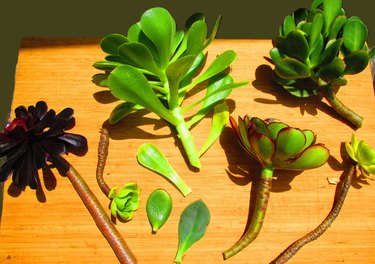
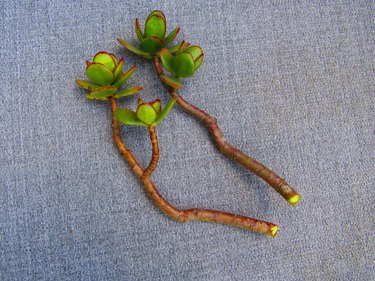
    Cut the tips (including the end leaf and the second and third leaves in from the end) off vining or branching houseplants such as monstera, wandering Jew or Ficus benjamina.

  2. Step 2

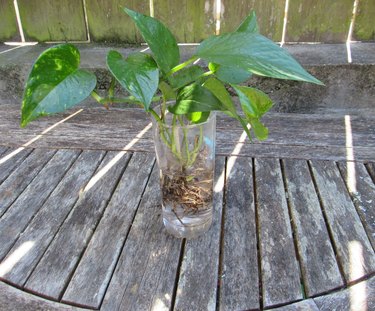
    Remove the bottom two leaves. Roots will form at the nodes where the leaves were removed, not from the leaves themselves. If left on the cutting, the leaves may rot and foul the water.

  3. Step 3

    Dip the cut end of the cutting into a rooting hormone product. Rooting hormones encourage new root growth.

  4. Step 4

    Place the prepared cutting into a small pot filled with damp quarry or river sand. You may also use damp perlite or vermiculite.

  5. Step 5

    Set the cuttings in a bright, warm location, away from direct sunlight. To increase humidity while roots are forming, place the cuttings (in their containers) in a clear plastic bag. To prevent the bag from collapsing onto the young plants, place two or three chopsticks into the sand to support the bag. Tie the plastic bag loosely at the top with twist ties or rubber bands.

  6. Step 6

    After roots form, transplant the cutting into a small pot filled with damp potting soil. Tug gently on the plant to check for root development. If the plant pulls out of the sand easily, it's not ready. If there's some resistance, roots have formed and the cutting is ready to transplant.

  7. Step 7

    Treat your new plant as you would any other houseplant. Be extra careful about proper moisture and light until the plant has fully established itself.

Tips & Warnings
  • Cuttings from foliage plants should not be longer than 3 to 4 inches, unless the plant is very large. Take several cuttings to ensure success in propagation.
  • African violets can be grown from a single leaf. Remove the leaf from the plant, dip the cut end into rooting hormone, place the cutting in damp sand, then transplant when roots form.

Comments  

Anonymous

Anonymous said

Flag This Comment

on 11/22/2005 There are many plants that you can take cuttings from. The best is a willow tree because it can be propagated in water. All you need to do is take a healthy twig (about 15 inches long) and put it in a jar of water. To ensure that the cuttings take root, you can dip the ends in hormone rooting powder. Each cutting may take a week or two before they begin to root. Three out of five cuttings will take root. When they have roots 2 to 3 inches long, transplant the cuttings to a pot. Make sure that you use peat moss mix when you transplant. This process may be used with lilac, geraniums, roses and many other species.

Anonymous

Anonymous said

Flag This Comment

on 11/22/2005 Get an old milk jug, rinse very well, add a tablespoon of any fertlizer (but not necessary), add a couple of pinches of suga and a few drops of dish washing detergent and left over beer that someone forgot on your cocktail tableleft in a can, add water and let sit about 2 days under a cabinet or dry spot w/no sunlight. Then shake it up and puor the mixture on plants between waterings. Works for me. At first I was afraid and then the next growing season my houseplants came back with extra large leaves. Works extremely well on philodendrons.

Anonymous

Anonymous said

Flag This Comment

on 11/22/2005 Water only once per week, or use a self watering pot. Once a month, water your plants with tea. Fill a two-liter juice pitcher with water and throw in two tea bags. Let sit for about 10 minutes, then water all your plants.

Post a Comment

Post a Comment
  • Have you done this? Click here to let us know.
I Did This

Related Ads

Home & Garden
Ruby Bayan,

Meet Ruby Bayan eHow's Home & Garden Expert.
Get Free Home & Garden Newsletters

Copyright © 1999-2009 eHow, Inc. Use of this web site constitutes acceptance of the eHow Terms of Use and Privacy Policy.   en-US

eHow Home and Garden
eHow_eHow Home and Garden