

Images of poverty in the developing world can shock the senses. According to UNICEF, approximately 600 million children in developing countries live on less than $1 per day. Even more startling, one person, usually a child under five, dies of hunger every 3.6 seconds. While poverty exists in every country and the reasons for poverty vary, several causes of poverty affect large portions of the developing world.
Tip
Many developing nations suffer poverty as a result of colonialism, governmental corruption and elitism, poor access to education and a lack of basic resources.
Impact of Colonialism
Many countries have never fully recovered from the effects of colonialism. For example, in parts of Africa, the slave trade removed the healthiest of the young people from the economy for generations. Even after the end of the slave trade, colonial powers used most colonies as sources of inexpensive labor and pilfered resources while providing little in terms of services and development to indigenous populations. These problems continued into the 20th and 21st centuries as wealthier nations supported dictatorships to ensure a steady flow of inexpensive resources into neocolonial pockets.
Corruption and Elitism
In many parts of the developing world, corrupt dictatorships and economic elitism contribute to income inequality and poverty. In systems where bribery determines opportunities such as government contracts, those opportunities go to individuals with the money to pay the bribes. Corrupt governments may also afford opportunities to those with friends and relatives who play a role within the government itself. This tends to create a climate where a small group of already wealthy and powerful individuals increase their wealth and power while the majority of the population remains in poverty.
Educational Opportunity
Education is one of the surest ways to lift people out of poverty. However, in many impoverished countries, poor children do not attend school either because educational opportunities do not exist or because children must work to help support their families. This creates a cycle of poverty in which each successive generation needs children to work rather than go to school.
Environment and Resources
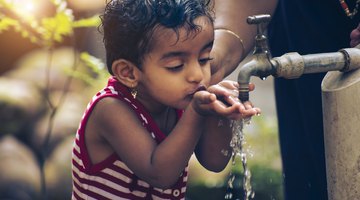
Developing nations may also experience a lack of basic resources, such as fuel, water and land for growing food. Poor education contributes to this problem in situations where poor land management leads to lower crop yields. Additionally, poor public health and environmental practices lead to increases in disease. The UNICEF statistics addressing this are startling: one in five children worldwide lack sanitation facilities, and one in four children have no safe drinking water.
Related Articles







References
Writer Bio
Justin Beach has been writing for more than a decade, contributing to a variety of online publications. He has a Bachelor of Science in computer information systems and additional education in business, economics, political science, media and the arts.