




From Bar Harbor all the way down the coast of Maine, whales can be seen cruising and frolicking throughout the summer. Mid-April brings the northern Humpbacks, Fin whales, the endangered North Atlantic Right Whale and Minke whales. Seals, dolphins, porpoises and puffins are also often seen around the whales. Whales can be spotted from charter boats and beaches, and some coastal B&Bs offer whale watching from their balconies.
When to See Whales in Maine
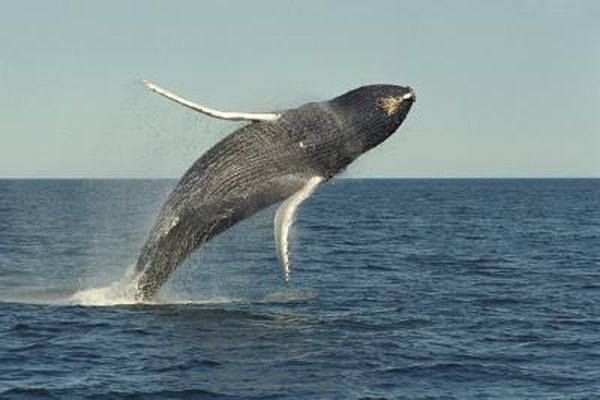
Whales migrate to the coast of Maine to feed in mid-spring, leaving in October for warmer waters. June, July and the beginning of August are the best times to spot them off the coast of Maine.
Time of Day to Spot Whales

Whales can typically be spotted throughout the entire day, but at midday they become scarcer as they dive deeper to feed. Weather can affect whale-spotting times and locations.
What do Whales Eat

Whales are drawn to the Eastern Seaboard, as it is abundant in sand lance, also called sand eels, copepods and plankton. They also feed on euphausiids, salmon, capelin, mackerel and cod. Depending on the species, whales can eat from 2,625 to 4,400 pounds of fish or plankton a day.
Whale Behavior
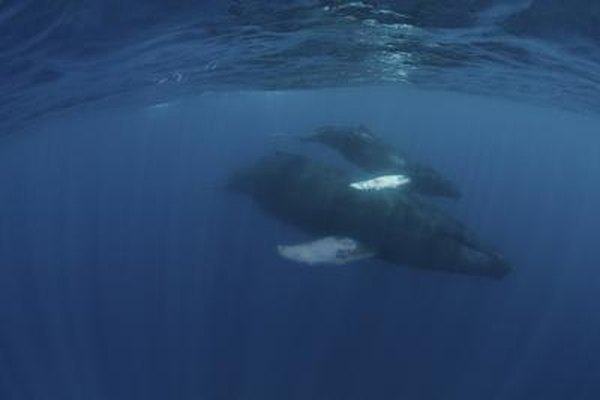
Baby whales nurse for six to seven months, and can often be sighted swimming alongside their mothers. It is common to see whales leap into the air during their swims, referred to as called "breaching," and breathing by spouting water through their blow holes, providing memorable photo opportunities.
Migration Patterns
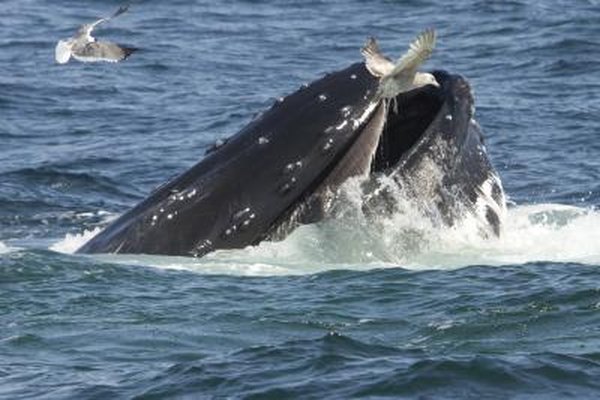
Humpbacks and Fins migrate to temperate and polar areas in summer to feed, and in October head to tropical waters to mate and calve. The Right whale breeds and calves in the North Atlantic, while the Minkes live in all but polar seas.
Photo Credits
- Earle Keatley/iStock/Getty Images