Things You'll Need:
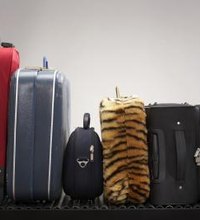
- Carry-on Bags
- Garment Bags
- Handkerchiefs
- Luggage Sets
- Travel Clothes
- Umbrellas
- Cash
- Travelers' Checks
- Backpacks
- Duffel Bags
- Umbrellas
-
Step 1
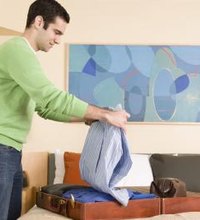
Pack navy and gray suits for formal business occasions. Women should opt for knee-length skirts, high-collared blouses, hose and pumps.
-
Step 2
Avoid red, as it's considered a very provocative color. Black is considered appropriate for funerals and little else.
-
Step 3
Pack lightweight pants, jeans, skirts and short-sleeved tops when visiting during spring and summer. Shorts are inappropriate for both men and women.
-
Step 4
Layer during the warmer seasons with sweaters and a fleece jacket. A medium-weight coat and a pair of gloves will keep you warm during the winter.
-
Step 5
Take loose-fitting garments. Traditional Japanese dinners require you to sit on pillows or tatami mats.
-
Step 6
Take closed-toe sandals and comfortable walking shoes that are easy to get on and off.
-
Step 7
Bring socks whenever you travel, as you'll need them when you dine shoeless in a traditional Japanese restaurant or visit temples. Thin socks will suffice in summer, but thick socks are a must in the colder winter months.
-
Step 8
Stash a few handkerchiefs in your carry-on bag. These will come in handy to dry your hands in Japanese-style bathrooms, which do not supply hand dryers or paper towels.
-
Step 9
Take an umbrella regardless of the season, as you're likely to see rain whenever you visit.
-
Step 10
Bring plenty of cash and traveler's checks, since credit cards are only accepted in limited venues.


Comments
an0nymusblu3 said
on 10/13/2009 wow they really want you to have an umbrella lol
otaku525 said
on 4/7/2007 Im guessing your writing this for more formal vists and for older people, becuase I've been to japan and I saw people in shorts and the styles were quite unique!Mostly around Shinbuya and Harajuku! Gothic lolita and street fashion is quite the rage!
Anonymous said
on 8/8/2006 If you decide to eat traditional Japanese food, make sure a person who speaks Japanese accompanies you or there will be no way to know what you are eating.
A simple alternative, when you're alone is to eat at a bakery or coffee shop, as they have pretty universal eats, like; croissants, bread rolls filled with sweet stuff or savory stuff like chicken.
Anonymous said
on 7/28/2006 There are many public restrooms in Japan that did not have a means to dry your hands after washing them. This is due to the fact that many Japanese carry handkerchiefs with them. In some restrooms you might find heated air dryers, but to be safe carry tissues or a handkerchief with you.
Anonymous said
on 11/22/2005 I found the business district of Shinjuku to be very safe and friendly. There were a lot of coffee shops and restaurants with English menus. I stayed at the Keio Plaza Hotel, which was right next to the Shinjuku Train Station and just a few blocks shy of the busy part of town. There were a lot of department stores nearby as well.