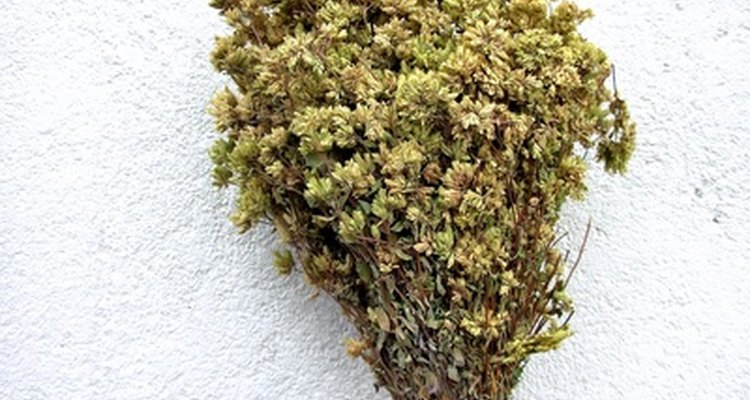
Drying or freezing your own herbs allows you to enjoy the bounty of your garden and efforts year round. Oregano is an herb that air dries well, particularly if you live in a relatively warm climate with low humidity. Freezing, on the other hand, is more practical for those in humid regions. Both methods preserve the taste of oregano, allowing you to enjoy it long past its growing season.
Drying
Select tall, healthy and bug-free oregano branches and cut them from their base. If you purchase fresh oregano from a grocery market or farm stand, choose long, bushy branches. Remove any discolored or wilting leaves.
Rinse each branch, whether from your garden or the store, in cool water to remove any hidden insects and dirt particles. Gently shake the branches to remove excess water, and place them on a clean towel to dry for at least two hours. The herbs must be completely dry before continuing.
Trim the shoots and leaves 1 inch from the bottom of each oregano branch and gather four to five together in a bundle. Tie a string around the trimmed area securely with a knot. You can use either twine, kitchen string, dental floss or yarn.
Hold the bundle, string side up, over an empty brown paper bag and lower it down until the tip of the stems almost reach the bottom. Close the top of the bag around the stems and tighten with a string. Using scissors or a knife, carefully poke holes and slits into the bag on all sides for ventilation.
Suspend the bag from rafters, beams, a clothesline or any object hanging from the ceiling in a warm, dry location. You can store the bag in an attic, laundry room, studio or any other room as long as the temperature in the room does not fall below 60 degrees Fahrenheit. Take caution if you live in a humid region; any moisture will cause the oregano to mold.
Dry the oregano for two to four weeks or until they feel thoroughly dry to the touch. Remove from the bag and store in an airtight container.
Freezing
Repeat the process for cleaning and rinsing your oregano branches. Dry the branches completely before you continue.
Remove leaves from the branches and keep them whole or chop into desired pieces, or keep the branch and leaves whole and together. Place in a zipping plastic freezer bag and close tightly, trying to remove as much air as possible. For a pseudo-vacuum seal, insert a straw into the corner of the bag and zip it closed as tight to the straw as possible. Suck out the air through the straw and quickly zip the bag the rest of the way shut.
Place in the freezer and store until needed. Consume the frozen herbs within a year.
Related Articles

How to Dry Cilantro at Home

How to Keep Mint Fresh for Drink ...

How to Dry Jalapenos

How to Make Rubbed Sage

How to Freeze Thyme in a Bag

How to Dry Sage Leaves Yourself

How to Dry Fresh Parsley

How to Dry Sage
How to Dry Tarragon
How to Freeze Ramps & Wild Leeks
How to Rehydrate Dried Herbs
How to Freeze Fresh Parsley

How to Store Your Fresh Cut Kale

How to Keep and Store Watercress
How to Keep Chives Fresh
Can You Freeze Spices & Herbs for ...
How To Dry Parsley in a Convection Oven

Can You Freeze Dill?

How to Prevent Bananas From Browning ...
How to Eat Fresh Oregano Leaves
References
Writer Bio
Mallory Ferland has been writing professionally since her start in 2009 as an editorial assistant for Idaho-based Premier Publishing. Her writing and photography have appeared in "Idaho Cuisine" magazine, "Spokane Sizzle" and various online publications. She graduated from Gonzaga University in 2009 with Bachelor of Arts degrees in history and French language and now writes, photographs and teaches English in Sao Paulo, Brazil.
Photo Credits
oregano bouquet image by inacio pires from Fotolia.com