

How to Build Your Own Smoking Pipe Rack

Organize your smoking pipes on a pipe rack built just for you, by you. A pipe rack stores and organizes all of your pipes, making them accessible whenever you want to smoke. Building a pipe rack is suitable for an amateur woodworker with a little experience or the advanced hobbyist. A simple pipe rack keeps all of your smoking accessories handy and available.
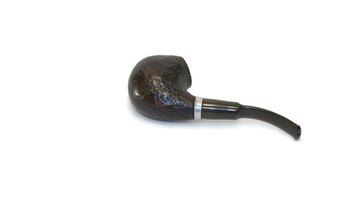
-
Draw the outline of a rectangle on the sheet of plywood with a pencil. Add a curve the top two corners using a compass, and then arch the bottom into a shape you like. This section can be drawn in anyway you like.
-
Draw a longer rectangle that is the same length as the width of the shape above, but only 3 inches wide.
-
Set the board into a vise and cut out both shapes using a jig saw.
-
Place the 3-inch wide rectangle shape into the vise with the flat edge facing you. Drill four 1/2-inch holes through the top. Use a 1/2-inch wood bit and power drill for this step.
-
Remove the rectangle from the vise and coat one side with wood glue. Secure the board to the larger rectangle so it runs horizontally across the board, near the middle of the board (or wherever you think it goes best.) Secure the boards together using hand clamps and set on a counter to dry, with the flat side down.
-
Place the pipe rack on your wall and after ensuring it is level, drill two mounting holes through the top of the rack and into the wall. Remove the rack and insert two drywall anchors into the holes you just drilled. Place the rack back on the wall and drive a 2-inch wood screw through each hole to secure the rack to the wall.
References
Resources
Tips
- Develop the larger board into any distinctive shape you like to match your style. For instance, a shield, boat or car.
Writer Bio
Steve Smith has published articles on a wide range of topics including cars, travel, lifestyle, business, golf, weddings and careers. His articles, features and news stories have appeared in newspapers, consumer magazines and on various websites. Smith holds a Bachelor of Arts in English and journalism from University of New Hampshire Durham.
Photo Credits
- Pipe image by UKL from Fotolia.com
More Articles

