
Kids Soccer Chants & Cheers
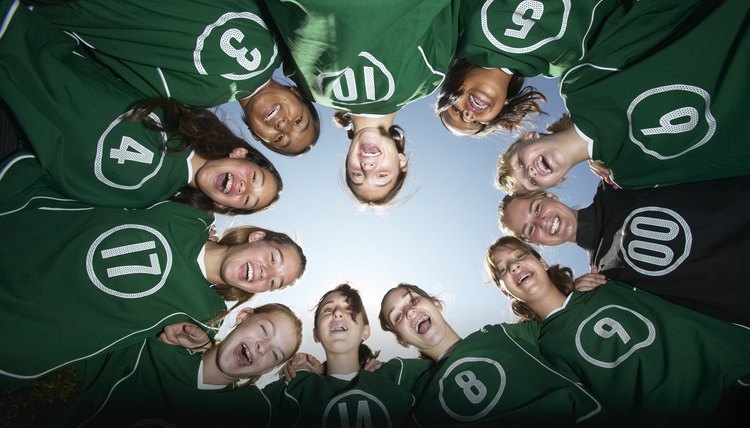
Performing cheers and chants at kids’ soccer games helps keep them motivated and brings a fun tone to the game. Children who are on the sideline during a soccer game will quickly get bored, so leading them through cheers will help them stay entertained and engaged. A good soccer cheer for kids will be simple to learn and have a rhythm that’s easy to follow. The chants should also focus on cheering one’s team rather than bashing an opponent, and should be appropriate for the age group.
Make a Score
The “make a score” chant is used when a team is down and needs to score a goal. Lead the kids through this chant if you notice they’re getting discouraged. It’s chanted in a rhythmic pattern.
“Kick that ball and make a score! Come on team, we want to see more! Move those feet! Cause victory is sweet!”
Repeat the full chant over and over, getting a little louder each time.
Show Us How to Get Down
Because it combines chanting and dancing, the “show us how to get down” cheer will quickly become one of the kids’ favorites. A coach or parent will lead the chant, prompting the kids to respond each time they’re addressed. The cheer goes:
“Hey [team mascot]? Yeah! Hey [team mascot]? Yeah! Show us how to get down! No way! Show us how to get down! OK – I stomp my feet, and I boogie to the beat. I turn around and touch the ground and that’s the way we get down!”
The kids act out the final line, stomping their feet, dancing, spinning in a circle, squatting to tap the ground and then perform a final dance segment.
Kick Our Soccer Balls
All kids typically chant together during the “kick our soccer balls” cheer. But, you can have a coach or parent yell the first and third lines to help keep the kids on rhythm. It goes:
“We don’t wear bows and skirts. We we only wear our soccer shirts! We don’t play with baby dolls. We only kick our soccer balls!”
At the end, you can add in a “Go [team mascot]!”
Classic Soccer Cheers
Two classic soccer cheers that you can teach and use with kids are “Ole, Ole, Ole” and “Glory Glory.” "Ole" is a Spanish word, and it translates as "bravo" in English. The “Ole, Ole, Ole” chant, used by soccer fans throughout the world, repeats the word ole six times and then starts over again. In the “Glory Glory” chant, the repeated word precedes the team’s name and is sung to the tune of “The Battle Hymn of the Republic.” Both chants are used at the professional and international competition level, but are appropriate for kids as well.
References
Writer Bio
Kim Nunley has been screenwriting and working as an online health and fitness writer since 2005. She’s had multiple short screenplays produced and her feature scripts have placed at the Austin Film Festival. Prior to writing full-time, she worked as a strength coach, athletic coach and college instructor. She holds a master's degree in kinesiology from California State University, Fullerton.