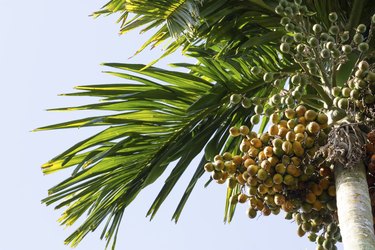
The popularity of areca palm (Dypsis lutescens) shows in its several common names, including golden cane palm, yellow butterfly palm and bamboo palm, and the care for an areca palm tree is easy once established. It grows as a perennial only in the warm climates of U.S. Department of Agriculture plant hardiness zones 10 and 11, but the palm's slow growth and graceful habit make it suitable as a indoor container plant anywhere. It's rated as the world's most popular palm grown as a houseplant.
Soil and Water
Video of the Day
Areca palm has moderate water needs once established outdoors. When newly planted, keep the soil around the roots moist, then water once or twice weekly during hot, dry weather. For container plants, keep the soil uniformly moist but not soggy, and keep humidity high by placing the container on a water-filled pebble tray or misting it occasionally. If you use a pebble tray, make sure the water level stays below the tops of the pebbles so your palm's roots don't stand in water. Areca palm prefers rich, fertile, acidic, well-draining soil.
Video of the Day
Sun or Shade
Outdoor plants grow best in sun but will tolerate partial shade. Young plants may become yellow or scorch if they get too much sun. Indoor container plants can become gradually used to shady conditions. To transition a new container plant from its sunny spot outdoors to indoor lower light levels, ease it through with a few days in dappled shade on a porch or under a tree outdoors in warm weather and then to the brightest spot you have indoors.
Fertilizing an Areca Palm Tree
Areca palms need regular fertilizer. Outdoors, apply a granular palm fertilizer containing micronutrients, according to label directions. Use an 8-2-12 slow-release formula with micronutrients in spring, summer and fall. Use up to 1 1/2 pounds of fertilizer per 100 square feet of palm canopy. Avoid breathing the dust.
For container plants, apply 1 to 2 teaspoons for a 6-inch pot and 1 to 2 tablespoons for a 1-gallon pot three to four times a year, tweaking the amounts and reapplication rates if label directions vary from these recommendations. Scatter the granules evenly over the soil surface and then water them in.
Spacing and Pruning
For a hedge effect, space areca palms 3 to 6 feet apart. When planting close to a building, plant the palm a minimum of 4 feet away from the structure. The palms grow from 15 to 20 feet tall, so don't plant them beneath roof overhangs or low overhead wires. The leaves on a mature plant provide an 8- to 10-foot-wide canopy, more if you've allowed the palm to cluster.
If you're using areca palm as a background planting, allow it to retain all its leaves for a full effect. Prune off lower leaves to reveal the yellow, jointed-looking trunks for a specimen plant. You can remove an offshoot (a sprout that grows from the base of the palm) and root it. You may wish to prune offshoots away to open up the center of landscaping plants and to keep container plants from getting too large. When pruning, use pruning shears that have been wiped with a cloth soaked in rubbing alcohol. This helps prevent the spread of disease.
Diseases and Pests
Areca palm is relatively pest- and disease-free. Outdoor palms may be exposed to a deadly disease spread by leafhoppers, called lethal yellowing, for which there is no cure. Sap-sucking pests are more likely to occur on indoor plants, and include whiteflies, spider mites and scale insects. Be vigilant for them and wash them off with a strong spray of water when you first see them.