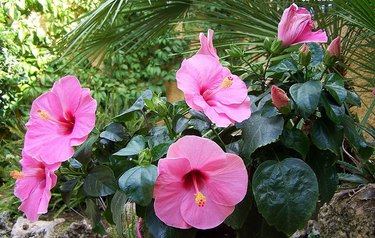
White fuzzy stuff on hibiscus (Hibiscus rosa-sinensis, USDA zones 9 through 11) is a good indication that your plants are infested with mealybugs. The last thing you want is for the pests to damage the hibiscus so badly that you'll no longer be able to enjoy the plant's big, boldly colored tropical blooms. As with all types of pests, early detection and treatment go a long way toward getting the pest problem under control, ensuring your hibiscus will continue its healthy growth and production of striking blooms.
Identifying Hibiscus Mealybugs
Video of the Day
Often mistaken for wooly aphids due to their similarities in looks, mealybugs are sap-sucking pests of the hibiscus, and many times, you'll notice ants traveling to the infestation for honeydew. Plant damage occurs when the pest inserts its threadlike mouthpart into the hibiscus and sucks out the plant's sap, leading to leaf drop and distortion. Flower buds become deformed and can fail to open. Mealybugs may also cause the dieback of twigs. The pest grows up to 3 millimeters long and has a fluffy, waxy covering. Mealybugs usually congregate in groups on plant leaves and stems. Females are wingless, soft-bodied pests, whereas males are winged and gnatlike with long, waxy tails.
Video of the Day
Although not a typical hibiscus pest, the two most common mealybugs affecting hibiscus plants are the pink hibiscus mealybug and the longtail mealybug. Longtail mealybugs (Pseudococcus longispinus) sport long, waxy tails and are yellowish to gray. The pest is around 1/4 inch long, and as it sucks out the hibiscus plant's juices, it deposits honeydew that in turn supports the black fungus called sooty mold. A severe infestation of longtail mealybugs can kill a sensitive plant.
The pink hibiscus mealybug (Maconellicoccus hirsutus) is native to Asia, and like longtail mealybugs, they suck out the sap and then inject toxic saliva into the plant, which causes the leaves to curl and become distorted. Flower buds may drop before blooming or may fail to open. The pest is around 3 millimeters long, grayish-pink in color, and covered in a waxy coating.
Hibiscus Mealybugs Treatment Options
Due to their waxy coating, mealybugs can be hard to control, especially if the population is allowed to grow large. Keeping the hibiscus healthy and the area surrounding the plant weed-free goes a long way toward helping the plant withstand a minor infestation. If you find only a few of the pests on your hibiscus, you can wipe them off with a cotton ball dipped in alcohol or try knocking them off the plant with a strong blast of water. Systemic insecticides offer good control, as the mealybug dies from eating the toxic plant instead of being sprayed directly with an insecticide.
In addition, you can smother the pests using a horticultural oil or neem oil, being sure to saturate all sides of the infested area. You'll probably have to treat the hibiscus several times before you finally rid the plant of the mealybugs. Always follow label directions regarding mixing amounts and only apply these products to nonstressed hibiscus plants. To prevent possible plant damage and to promote the best control, don't apply horticultural oil if you expect rain in the next 24 hours or if temperatures are above 90 degrees Fahrenheit or below 45 degrees.