Things You'll Need
Well-ventilated room
Clean rags
Turpentine
Razor blade
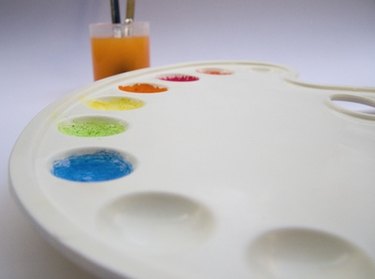
How to Clean a Paint Palette. As much as you may try to keep your palette clean, it's easy to forget occasionally and end up with a palette covered in rock hard dried oil paints. Dried oil paint is never easy to clean, but with some turpentine and a razor blade you can get it back to a usable state again.
Step 1
Wipe the palette clean after each painting session to prevent oil paint from crusting onto the palette in the first place. You can use some turpentine or linseed oil and a rag to remove all paint residue.
Video of the Day
Step 2
Start with a well ventilated room. Open windows in the room and set up a window fan, if you have one. Breathing in turpentine fumes is hazardous to your health.
Step 3
Wipe up any excess paint that hasn't yet dried onto the palette.
Step 4
Use a clean rag to dab turpentine onto the dried oil paint.
Step 5
Allow the turpentine to soak into the dried oil paint for about 30 minutes.
Step 6
Scrape the softened dried paint off the palette with a razor blade.
Step 7
Consider using disposable palettes, if you find that you often forget to clean up well after a painting session. Cheap plastic palettes can be purchased from craft stores, or you can cover a wooden palette with plastic wrap. You could also try a pad of palette paper.
Step 8
Soak a paint palette covered in dried acrylic paint in fabric softener. The paint will soften and come off very easily.
Video of the Day