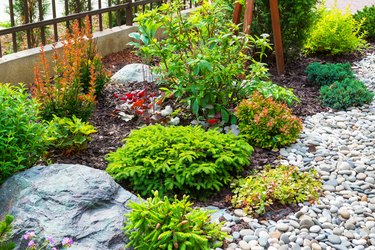
Rock yards are environmentally friendly and easy to maintain aside from the persistent weeds. Not just anything can be put under a layer of rocks in a backyard to prevent weeds. Prepping the area and choosing the right type of weed barrier will keep weeds at bay and last for many years.
Tip
Landscaping fabric creates a weed barrier under the rocks in your yard. It is affordable and relatively easy to install.
Video of the Day
Prepare the Area
Before laying down any weed-killing barrier and a hefty layer of rocks, the area should be cleared of any unwanted greenery. Pluck visible weeds from the dirt by hand.
Video of the Day
A small hand rake can help to pull up any stubborn weeds that have wound roots deep into the soil. Push the rake below the root and pull up. Move across the backyard area in small patches, putting pulled weeds in a plastic bag or bucket to reduce the number of spores that can drift from the plant and settle into the dirt.
Organic and Chemical Weed Killers
Once all of the weeds are removed, spray the area with a weed killer or with horticultural vinegar. When using any kind of weed killer, wear work gloves, a particle mask and safety goggles. The vapors can irritate your eyes, nose and throat, and the chemicals can irritate your skin as you spray the formula onto the weeded area.
Areas that aren't infested with weeds can be treated with horticultural vinegar, which contains 20 percent acetic acid, compared to household vinegar, which typically contains only 5 percent. Spritz the vinegar over the weeded area and allow it to soak in.
Cover the area with a pre-emergent herbicide that will work to prevent weeds from gaining ground under the layer of rocks for a few years. If the rock area is close to or next to a lawn or gardening beds, install a steel edging border around the edges. The border should be at least 3 inches high to keep the roots of plants, grasses and weeds from finding their way into the rocked area.
Choose a Quality Landscaping Fabric
The right landscaping fabric installed properly can last a few decades. Nonwoven landscaping fabric blocks light from reaching the treated dirt under a rock yard. It blocks seeds that need light to grow from sprouting. However, a woven landscape fabric with perforations can allow weeds that blow into the area to sprout and the roots to adhere to the webbed fabric below the rocks.
Choose a professional-grade landscape fabric that does not rip easily. Check the weight of the roll of landscape fabric. The heavier the roll, the thicker the fabric.
A UV-stabilized landscape fabric has a coat of chemicals to keep light from penetrating into the soil and allowing weeds to grow. Add 8 inches for an overlap between layers when determining how much landscaping fabric to buy. Use fabric pegs to secure the fabric to the area about every foot in the center and around every 8 inches along the edges to keep the fabric secure.