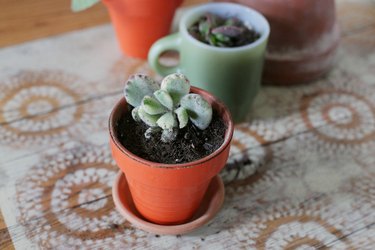
Bear paws (Cotyledon tomentosa) are lovely, unique succulents that many gardeners love to grow. They feature bright-green succulent leaves with reddish-brown teeth along the margins, that resemble the claws of a bear. Although primarily grown for their evergreen leaves, bear paws can also produce yellow or orange bell-shaped flowers during the growing season.
Where to Plant Bear Paw
Video of the Day
Bear paw succulents can be grown outside in the warmest zones. They thrive in U. S. Department of Agriculture plant hardiness zones 9 through 11, but they are regularly enjoyed as indoor houseplants in cooler zones.
Video of the Day
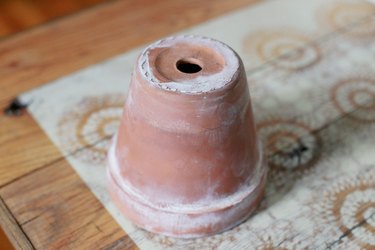
Bear paws grow in bright, shaded areas where they rarely receive direct sunlight. Outdoors, plant them in slightly sandy, well-drained soil where water doesn't collect after rain or irrigation. Potted plants require a container with good drainage holes.
You can use a special succulent potting soil. Alternatively, make your own potting mixture from 2 parts coarse sand, 2 parts soil and 1 part peat, a combo that will provide adequate drainage. When planting bear paws in containers, select pots only slightly larger than the root system.
Watering Bear Paws
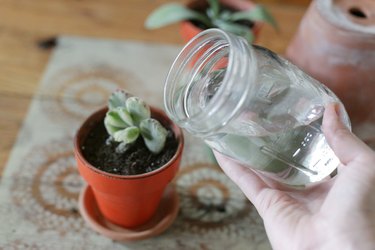
Regular deep watering in the summer months, when the plant is actively growing, keeps the bear paw healthy. Water garden plants deeply once weekly when there is no rainfall, supplying about 1 inch of water.
Potted plants require watering once the soil has almost completely dried. Fully drench the soil until the water drains from the bottom hole in the pot, and empty the collected water after the pot finishes draining. Bear paws only require enough water in winter to prevent the soil from drying out completely. If it does, the succulent leaves will shrivel.
Fertilizing a Bear Paw
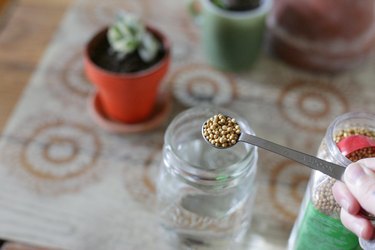
Most succulents require little fertilizer. For the bear paw succulent, you might offer it light fertilization twice monthly during the active summer growing season, usually from April to August.
If you wish to do so, use an all-purpose water-soluble fertilizer or one formulated for succulent plants. Follow label directions.
Winter Succulent Care
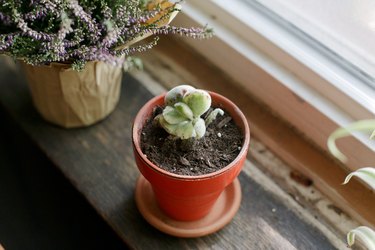
Bear paw succulent plants grown outdoors in chilly climates will require overwintering indoors. Bring the pots inside before temperatures drop below freezing in the fall. Place the pot where the plant gets bright, indirect sunlight.
Avoid fertilization and overwatering during this time. If you want to leave the plants outside, note that they will only survive if your area doesn't experience a freeze. If in doubt, cover plants with a light mulch, such as straw, to help them survive a light frost.