
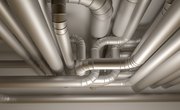
The calculations and science that go into the specifications for the safe bending of pipe can be complicated. The thickness of pipe, flexibility of the material, angle of bend needed and other factors are all considered. Fortunately, for those needing to measure the radius of a pipe that has already been bent, the process is much simpler.
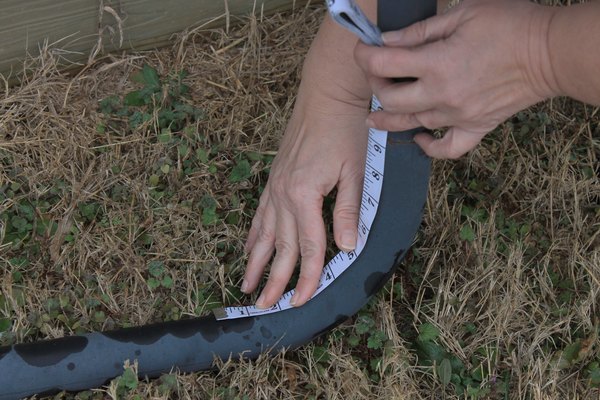
Measure the circumference of the pipe bend with a tape measure. Do this by pressing the tape against the inner surface of the pipe. Then run the tape from the point where the bend begins on one straight end of the pipe, to the point where the bend ends on the other side of the bend. (See line in blue on graphic)
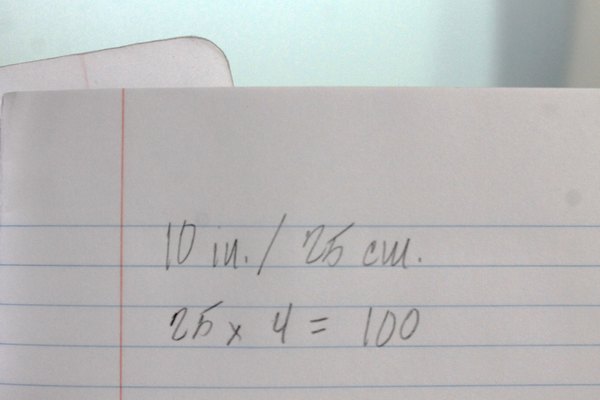
Multiply the circumference measurement from Step 1 above by 2. This is for a 180-degree pipe bend as shown in the graphic. For a 90-degree pipe turn, multiply by four at this point.
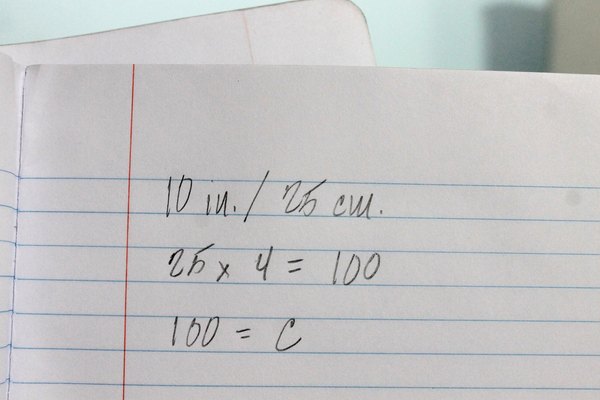
Take the result of the calculation in Step 2 and call this value "C."

Use the following equation to calculate the pipe bend radius (R): R = C/2(pi) where pi = 3.14
For example, if you measurement from Step 1 was 100 cm, and the pipe was bent at 180 degrees as shown: C = 2*100 = 200 cm R = 200/2(3.14) = 31.85 cm
About the Author
Anthony Smith began writing for Demand Studios in May of 2009 and has since written over 1400 articles for them. He also writes for "The College Baseball Newsletter." He attended the University of New Mexico, and has more than 25 years of experience in the business world.
Photo Credits
Dana Dowling/Demand Media