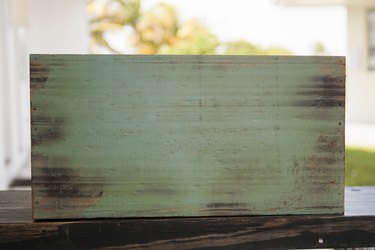
Make a newly built woodworking project look decades -- even centuries -- old rather than appearing fresh from the home improvement store by employing a few antiquing techniques. Do-it-yourself antiquing techniques "age" new wood and give it a worn, weathered appearance. These wood-aging techniques can be used for just about any project involving new wood. You can simulate rustic wood beams in your kitchen ceiling of build a primitive, antique-looking garden bench.
Step 1
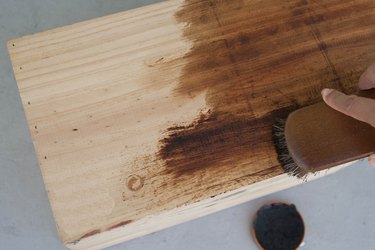
Coat the wood with brown shoe polish if you want it to appear slightly aged. Use a shoe polish brush to wipe the polish back and forth across the wood grain so that the polish really settles into the wood. This technique works nicely for small wood projects such as wooden birdhouses.
Video of the Day
Step 2
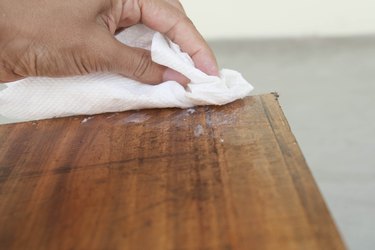
Determine where natural areas of wear and tear would exist on your wood if it were, in fact, old; some examples include seat edges, corners and cabinet doors. Use a paper towel to rub candle wax, paste wax or petroleum jelly into those wear-and-tear areas to give the wood a distressed look. Paint over the entire wood surface (including the areas that you waxed) using the latex paint color of your choice. After the paint is dry, use a paper towel to wipe in a side-to-side motion over the areas that you waxed. You will start to see the wood grains under the paint, which gives your wood piece a distressed, aged look. After you are pleased with the look of your piece, coat it with mineral spirits, a natural de-waxer, using a paintbrush.
Step 3
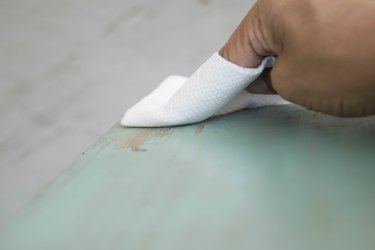
Use a paper towel to wipe in a side-to-side motion over the areas that you waxed after the paint is dry. You will start to see the wood grains under the paint, which gives your wood piece a distressed, aged look. Once you are pleased with the look of your piece, coat it with mineral spirits, a natural de-waxer, using a paintbrush.
Step 4
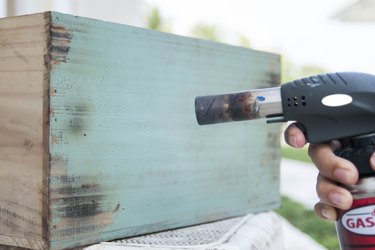
Carefully burn certain areas of the wood using a blowtorch. This will give your wood a darkened, worn look popular on many primitive hutches, corner cabinets and farm tables.
Step 5
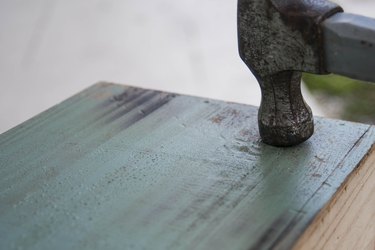
Give your wood that century-old barn look that is weathered and worn with dents and blemishes by beating the wood with a hammer to create nicks and scratch marks. Then hit it with a chain and rub it with fine-grit sandpaper to achieve even more bangs and dents. Lastly, use a large wire brush to wipe the wood with the grain. This gives the wood a time-weathered appearance that will even fool Mother Nature.
Step 6
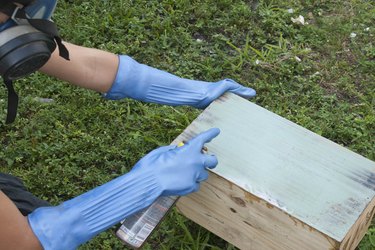
Don a protective mask and gloves. Spray your wood with a lye-based oven cleaner for an old, gray wood look. Use the cleaner outdoors or in a well-ventilated area. Wipe off the excess cleaner and add a coating of white vinegar using a paintbrush. The white vinegar will neutralize the lye-based cleaner.
Video of the Day