-
Step 1
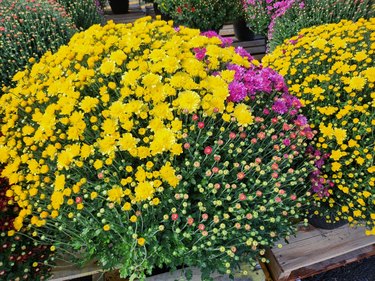
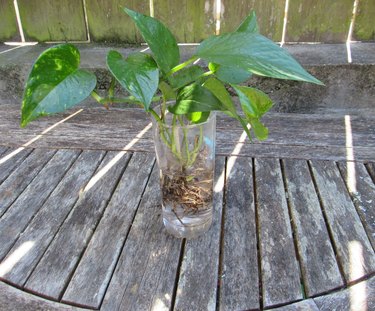
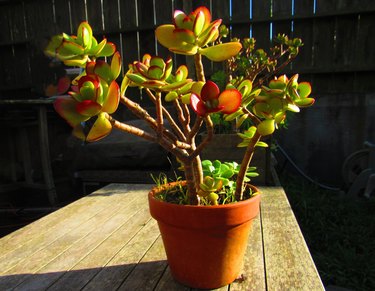
Consider container plants, which are easy to tend, replace and rearrange. One additional advantage: Frost-sensitive container plants can be moved indoors for the winter and brought outdoors again the next spring.
-
Step 2
Plant trees and shrubs that won't hang over the pool because nearly every variety will drop something into it - leaves, petals, pollen.
-
Step 3
Forgo plants with destructive roots. Mulberries and cottonwoods are taboo for this reason.
-
Step 4
Move the messier plants so the tips of their branches are at least 8 feet from the pool.
-
Step 5
Note that shorter plants' leaves and flower petals are less likely to get caught by the wind and be blown into the pool. Options include ornamental grasses such as ophiopogon, liriope and maiden grass and small shrubs such as 'Harbour Dwarf' nandina and dwarf yaupon holly.
-
Step 6
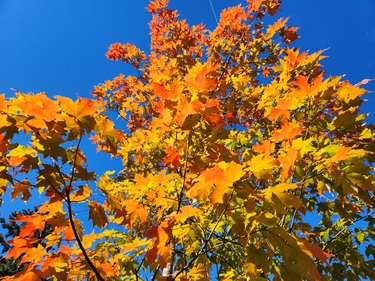
Choose trees and shrubs (maples, forsythia, etc.) that drop their leaves in a short period and you can do one cleanup. Crape myrtles are a poor choice because their flowers fall for months (staining the sidewalks) and their leaves drop in fall, too. Droppings from fruit trees are also a problem.
-
Step 7
Avoid pest and disease prone plants. You won't want to be spraying toxins that end up in the pool.
-
Step 8
Try to choose plants that won't require a lot of pruning. It could be difficult to reach branches hanging over the deep end.
-
Step 9
Avoid evergreens such as live oaks and pines, even though they seem like an obvious choice. In fact, they tend to drop needles, leaves, pine cones, flowers, and acorns (that stain pool decks and sidewalks) for months. Hollies are a better choice for evergreens, but don't put a stickery species near the pool where romping kids can be hurt.
-
Step 10
Be sure not to place any plant near the pool with stickery bark or foliage or thorns. Hard yucca (a.k.a. Spanish bayonet), cactus, pyracantha (a.k.a. firethorn) and the ultra-spiny Chinese holly are among the no-nos.
-
Step 11
Avoid plants that attract stinging insects. Bumblebees flock to Salvia Greggii, for instance, so it should not be used.
-
Step 12
Note that perennials tend to be messier than annuals, so you might want to place annuals nearest the pool. Begonia and coleus are two good options.
-
Step 13
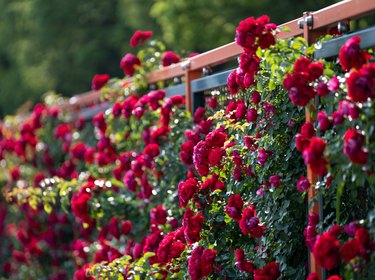
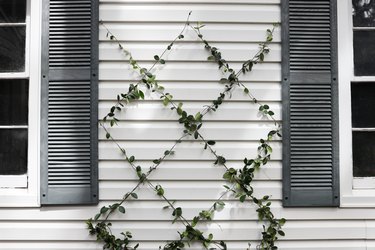
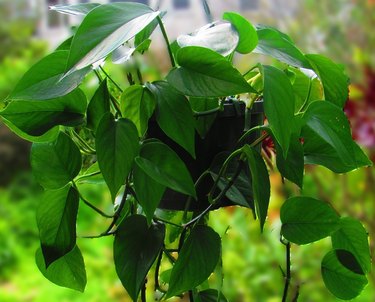
Ensure privacy by carefully setting up a large trellis or arbor to block the eyes of passersby or the view from a neighbor's window. Good vines for a trellis or arbor include the noninvasive coral honeysuckle ('Gold Flame' is one variety) and Carolina jasmine.


Comments
PositivePolly said
on 2/22/2009 Great advice! I just planted monkey grass around the deck apron and Ilex Sky Pencils. I learned about staining the deck when Hibiscus blooms fell (the plants were very tropical but spread too wide and couldn't be cut back far enough - a lot of work).
eric011 said
on 2/9/2009 This is some good advice. I'm a big fan of tropical-esque landscaping around a pool, even if you don't have a Florida climate. It just takes a little education and it's really amazing how easy it is to create a very exotic looking tropical setting around a pool. Believe it or not, there are so many stunning tropical and tropical looking plants that are so very easy to grow. My thoughts .... break from the norm and turn your pool into something more than a "cement pond" in your backyard. I call mine my "Backyard Resort"
Eric
www.tropicalyard.com/blog