How to Shine Silver Safely
Restore silver or silver plate back to its formerly lustrous self with little more than a quick trip to the bathroom. It takes just minutes to brush away tarnish buildup with ordinary toothpaste. You can apply the same technique using commercial silver polish. However, toothpaste is handier, cheaper and less toxic.
- Difficulty:
- Easy
Instructions
Things You'll Need
- Cotton Sock
- Tarnish-resistant Flannel
- Rag
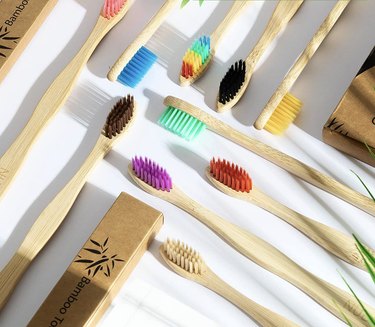
- Toothpaste
- Airtight Plastic Bag
-
-
1
Place a clean cotton sock on your polishing hand.
-
2
Dampen the sock slightly under cool running water.
-
3
Squeeze a pearl-size drop of toothpaste on your fingertip area.
-
4
Apply the toothpaste to the silver using up-and-down rather than circular strokes until the tarnish is gone.
-
5
Use a twisted bit of rag to get between silverware tines and other tight spaces.
-
6
Rinse the silver well.
-
7
Polish it dry with the clean side of the sock.
-
8
Store silver in an airtight plastic bag or in a chest lined with tarnish-resistant flannel.
-
1
Tips & Warnings
Don't put rubber bands around silver or it will tarnish.
Related Searches
Comments
-
morgana46
May 01, 2008
Dear Anonymous: You just wrote a whole article that was very informative! Why not just join and write for eHow, not just comment? -
morgana46
May 01, 2008
Dear Anonymous: You just wrote a whole article that was very informative! Why not just join and write for eHow, not just comment? -
Nov 22, 2005
A. The tarnish preventive strips are available from Hagerty, which can be accessed online. heir products are also sold at fine jewelry stores and Bed, Bath, & Beyond stores. Hagerty is the best brand I've found for tarnish prevention. These strips protect a cubic foot of enclosed space. If the area is opened, the effect is diminished. B. Toothpaste should be avoided for cleaning silver. Though it works well and seems innocent enough, it actually contains far more abrasives than silver can tolerate over extended use. The best cleaner I, and colleagues I know who polish silver en masse, have found is Wright's silver cream in the tub (not the liquid). This has enough abrasive to work, but without harming the silver. This is not the anti-tarnish formula. Anti-tarnish formulas are terrific for a final treatment, but do not contain abrasives required to help loosen tarnish initially to clean it. The best anti-tarnish product is Hagerty's. It is expensive, but worth every penny, for it will keep silver tarnish free for up to two years in a confined space, one year in a cabinet rarely opened, and months in the open air in a normal environment that is free from air-borne chemicals. If you have many chemicals in your air (as do I), then your silver will remain shiny in the open air for about 6-8 weeks before it begins to take on a slight golden tint. This is the time to polish it, before it becomes work again. Rinse the silver in warm, sudsy water to remove all loose dust particles (you don't want to grind them against the silver when you polish), then whip out your Wright's foam sponge with some polish on it, suds up the silver piece liberally all over, rinse under hot water, then dry with a soft cloth. It's perfect again, in the same amount of time it would take to simply wash it. Set it on clean paper towels, open a window or turn on a fan (no kidding, get the air flowing because this next step is toxic) and lightly spray the item all over with a quick spritz of Hagerty's spray-on anti-tarnish (don't breathe this stuff). Let dry thoroughly, then buff with a soft cloth until you get a jewelry store shine again. You're good to go for another two years in a closed space, or two months in the open. C. Avoid storing silver in plastic wrap for any length of time, especially in the heat. If you are obsessively careful to apply the plastic in a totally smooth layer, you may get lucky, but if you have any wrinkles in the plastic anywhere, those wrinkles act as tiny air pockets, containing trapped air that causes the silver to tarnish in the shape of the wrinkle. If you have silver with a thin plating, this will eat through the plating enough that the shadow of these lines will never polish out. When buying new silver, watch for this effect. If the package has been opened and resealed, the item may be tarnished in narrow areas that won't polish out in the newer, thinner layers of silver we often find nowadays in the low to moderately priced silver. Heavy gauge plastic such as resealable bags is OK to use. You can use a zip bag the same way you do space bags that collapse large bundles into heavy chunks. Polish your silver item and leave it out to dry for several hours or overnight-- always do this before storing silver in any container, as moisture damages it and all other silver pieces around it. All lids should be removed, or propped open so no moisture remains inside the silver item -- moisture causes pitting, black specks of rust that eventually eat through silver plating to the base metal. When thoroughly dry, place your silver in a resealable bag and begin zipping it closed. When you have about two inches left open, exhale all the air you can from your lungs, then place your mouth tightly against the opening and suck in; blow the air out your nose, not into the bag. Your breath has moisture in it that will cause the silver to pit if trapped in the bag. Now, suck in again. Repeat until the plastic collapses tightly around the silver and the top of the bag is flattened against itself. Continuing to suck in air, zip the remaining section in one movement. You now have an airtight container void of most air and containing a silver item with a coating of anti-tarnish on it.