eHow launches Android app: Get the best of eHow on the go.

How To

How to Childproof Your Home

Contributor
By eHow Contributing Writer
(11 Ratings)

Take measures to protect your child from common household dangers before you bring a newborn home from the hospital. After that, review your safety measures every six months to make sure your child has not outgrown or outsmarted any of them. Remember that no safety device outweighs the importance of adult supervision. The safety devices mentioned below are available at most hardware stores, drugstores and baby stores.

Difficulty: Easy
Instructions

    Overall precautions

  1. Step 1

    Install outlet covers and plates on outlets to prevent electrocution.

  2. Step 2

    Install smoke detectors in every bedroom and in kitchen.

  3. Step 3

    Use window guards, window stops or safety netting to prevent kids from falling out windows. Make sure adult or older child can remove safety devices to use window as emergency exit.

  4. Step 4

    Remove window blind cords that have loops, which can cause strangulation. Buy safety tassels to replace cord loops. (Or simply cut looped cords in half.)

  5. Step 5

    Keep children out of dangerous rooms (bathrooms, garage, office) with door-knob covers and door locks. Place slide lock or hook-and-eye latch high on door, out of child's reach.

  6. Step 6

    Use cordless phone to remain mobile with kids around. Have at least one cell phone in house for use in emergencies when there is no electricity.

  7. Step 7

    Post emergency numbers next to all phones, including numbers for poison control center, nearest emergency room and pediatrician.

  8. Step 8

    If your house has chipped or flaking lead paint, hire professional to remove it.

  9. Step 9

    Install safety latches on all cupboards and airtight containers, including refrigerators, chests or coolers, where child could become trapped and suffocate.

  10. Kitchen

  11. Step 1

    Install safety latches on cupboards within child's reach. Remember that safety latches are not fail-proof. Store knives, sharp objects and heavy pans out of child's reach.

  12. Step 2

    Store detergents, soaps, alcohol and other hazardous items out of reach.

  13. Step 3

    Keep breakables, especially fine china, in secured cupboard out of reach.

  14. Step 4

    Use back burners when cooking, and turn handles away from counter edge.

  15. Step 5

    Leave appliances unplugged when not in use, especially the toaster. Keep electrical cords coiled and out of reach.

  16. Step 6

    Always put iron away when not in use; never leave it on ironing board, where child could tug the cord.

  17. Step 7

    Equip faucets with anti-scalding devices. Never have hot drinks near children.

  18. Step 8

    Remove tablecloths, which can be pulled down, along with anything on them.

  19. Step 9

    Always latch trash compactor and dishwasher.

  20. Step 10

    Keep stairs and step stools away from counters to prevent unauthorized exploring.

  21. Step 11

    Keep fire extinguisher in kitchen but not close to any heat sources.

  22. Step 12

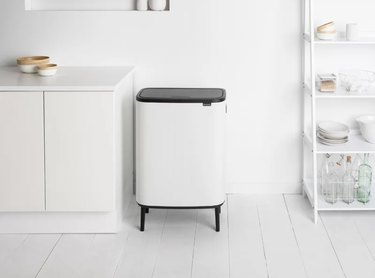
    Make sure trash can has lid and is inaccessible to children.

  23. Step 13

    Have a safe cupboard for child to explore while you are cooking. Fill with wooden spoons, plastic cups and lids, and other harmless items.

  24. Step 14

    Use safety gate to keep kids out of kitchen when you are not there.

  25. Bathroom

  26. Step 1

    Set water heater to 120°F (49°C) to prevent scalding; install anti-scalding devices on faucets and shower heads.

  27. Step 2

    Keep toilet seat cover closed to prevent drowning; install lid-lock for extra safety.

  28. Step 3

    Keep hair dryers, curling irons, electric shavers and other electric devices unplugged and out of reach. Don't plug in anything near bathtub.

  29. Step 4

    Install safety latches on cupboards; keep medications, toiletries and cleaning supplies out of reach. Store medication in original containers.

  30. Step 5

    Keep sharp objects out of reach (razors, manicure scissors and clippers).

  31. Step 6

    Place nonslip stickers in bathtub and rubber guard over bathtub faucet to prevent injury. Place nonskid bathmat on floor to prevent slipping.

  32. Step 7

    Install GFCI (ground fault circuit interrupters) on all outlets.

  33. Step 8

    Remove lower locks on bathroom door to prevent accidental locking by child.

  34. Living room

  35. Step 1

    Place bumpers on all sharp corners and edges of furniture. Remove any glasstop tables.

  36. Step 2

    Make sure area rugs have nonslip pads..

  37. Step 3

    Place indoor plants out of reach.

  38. Step 4

    Secure bookshelves, TV and other furniture against walls to prevent tipping.

  39. Step 5

    Keep remote controls, CDs and videos out of reach.

  40. Step 6

    Remove any frayed or unnecessary extension cords.

  41. Step 7

    Place any breakables or table lamps out of reach of children.

  42. Step 8

    Install fireplace grill; keep matches and fireplace tools out of reach.

  43. Step 9

    Keep recliner chair closed unless in use by adult; moveable parts can trap child.

  44. Stair and Hallway

  45. Step 1

    Install safety gates at top and bottom of stairs. Gates that screw into wall are more secure than those that use pressure.. Don't use accordion-type gates, which can cause strangulation.

  46. Step 2

    Remove any clutter or toys near stairs to prevent tripping.

  47. Step 3

    Install handrails along entire length of stairs if not there already.

  48. Nursery

  49. Step 1

    Make sure crib, playpen and other baby furniture are not near windows, dangling cords, heater vents, wall hangings or sharp objects.

  50. Step 2

    Use crib mattress that is firm and fits snugly into crib; do not place stuffed animals, blankets, comforters, pillows or other bedding in crib.

  51. Step 3

    Examine crib: Slats should be no more than 2 3/8 inches (6 cm) apart; posts in corners should be short (at most 1/16 inch/2 mm) unless it is a canopy crib; decorative cutouts should be smaller than a baby's head.

  52. Step 4

    Examine playpen: Mesh should be less than 3/4 inch (2 cm) and/or slats should be no wider than 2 3/8 inches (6 cm) apart.

  53. Step 5

    Make sure diaper changing table has safety strap, and changing supplies are within your reach.

  54. Step 6

    Install carpeting under changing table and crib to soften any accidental fall.

  55. Bedrooms

  56. Step 1

    Install carbon monoxide detectors in any rooms where people sleep.

  57. Step 2

    Secure chest of drawers, bookcases and other furniture to prevent toppling.

  58. Step 3

    Inspect toys for small or detachable parts. Dispose of broken or dangerous toys or toys that are heavy enough to cause injury to child.

  59. Step 4

    Do not leave balloons or plastic bags (even filled ones) near children; both can cause suffocation.

  60. Step 5

    Install safety rails on bunkbeds and make sure ladders are firmly attached.

  61. Garage and Yard

  62. Step 1

    Keep all toxins out of reach of children. Install safety latches on lower cup-boards. Use door locks or safety gates to keep children out of garages.

  63. Step 2

    Test to make sure garage door reverses automatically if there is an obstruction.

  64. Step 3

    Keep children away from exercise equipment at all times.

  65. Step 4

    Inspect outdoor play structures (jungle gyms, playhouses, slides) for loose screws, sharp edges, splintered wood and small removable parts that are choking hazards. Make sure such structures are stable and secure.

  66. Step 5

    Keep children away from barbecue grills, especially when in use.

  67. Step 6

    Fix any loose bricks or pathway cracks that can cause tripping.

  68. Step 7

    Place stickers on sliding glass doors so children won't walk into them.

  69. Step 8

    Keep any firearms unloaded and securely locked away. Store ammunition in a locked area separate from any guns.

  70. Step 9

    Remember that children can drown in 2 inches (5 cm) of water. Protect them from ponds, wells, kiddy pools and deep puddles.

  71. Step 10

    Install slide or hook-and-eye latch locks on all doors leading outdoors so children cannot go outside unattended.

  72. Step 11

    Install fence with locking gate around swimming pool.

Comments  

nethopperz said

Flag This Comment

on 2/18/2009 Very, very good article. I'm adding this to my favorites. Thank you so much for the advice. I'm working on child-proofing my house right now and this helped me to remember some things that I would've overlooked.

arwen said

Flag This Comment

on 2/13/2009 You should check out www.childproofmyhome.com They hall EVERY products that you can think of, and the best customer serivce I've seen in a long time!

rgustave said

Flag This Comment

on 12/3/2008 Great Tips!

Post a Comment

Post a Comment
  • Have you done this? Click here to let us know.
I Did This

Related Ads

Home & Garden
Ruby Bayan,

Meet Ruby Bayan eHow's Home & Garden Expert.

Get Free Home & Garden Newsletters

Copyright © 1999-2009 eHow, Inc. Use of this web site constitutes acceptance of the eHow Terms of Use and Privacy Policy.   en-US Portions of this page are modifications based on work created and shared by Google and used according to terms described in the Creative Commons 3.0 Attribution License.

eHow Home and Garden
eHow_eHow Home and Garden