

How to Take Rolls off Paint Rollers

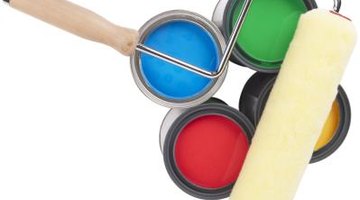
If you are painting walls or ceilings in your house, then you are likely using paint rollers. Using paint rollers is an easy way to apply paint to your walls and to leave a smooth finish. The paint roller is a disposable, spongy cylindrical tube that slips onto the wire mount of a paint roller frame and handle. You can release the roller brush from the roller frame by gripping the spongelike tube and pulling it off the wire frame so you can wash it and soak it once you are finished painting.
Step 1
Spread a drop cloth on the floor. Place a plastic bucket on top and pour paint thinner into the bucket until it is about 2 inches deep. You need a shallow bath of paint thinner in which to soak wet roller paint roller tubes. If the paint roller you are working with is soggy with paint, then put on plastic gloves before picking up the roller.
Step 2
Grip the roller frame handle, which is attached to the wire frame, with your secondary hand.
Step 3
Grip the paint roller with your main writing hand.
Step 4
Pull the paint roller in the direction of your writing hand, squeezing it gently as you pull it. The roller will slowly move off the frame.
Step 5
Place the roller into the paint thinner bath. Allow the roller to soak for about 10 minutes. Dip your hand into the bath with gloves on to retrieve the roller. Squeeze out the paint thinner. Place the roller beneath running warm water and wash thoroughly with a little dish-washing soap. Allow the roller to dry.
References
Writer Bio
Vera Leigh has worked as a professional freelance writer since 2008. Her work has appeared in "Learn Overseas" and "Grad Source" magazines. In addition, she received an honorable mention in "Newsweek's" My Turn contest. She has written features for nonprofits focused on literacy, education, genomics and health. In her spare time, Leigh puts her English major to use by tutoring in grammar and composition.
Photo Credits
- PhotoObjects.net/PhotoObjects.net/Getty Images
More Articles

