

Does Low Hot Water Pressure Mean a Bad Water Heater?

Determining whether your hot water tank is responsible for your low water pressure problem depends on whether the problem is in the hot water supply only or if it is localized to one area of your home. If the problem is localized to certain fixtures, then the problem may be repaired with a little cleaning.
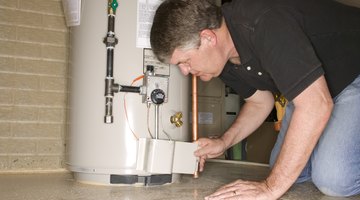
Low pressure in just your hot water supply indicates a problem with your water heater.
Low Hot Water Pressure
Water enters your water heater at the same pressure it leaves the appliance, meaning hot and cold water should be supplied at equal pressures. When the hot water leaves at a lower pressure than the cold water, then there is something wrong at the water heater. First check the shut-off valve on your water heater to make sure it is fully open. If the valve is corroded or broken, it should be replaced by a plumber. If the shut-off valve is open and working properly, then the problem may be inside the unit. Older water heaters can accumulate a buildup of sediment, and a blockage can affect the pressure at which hot water leaves the tank. Flushing your tank can solve this problem; simply attach a hose to the drain valve and run it outside. Turn on the valve and let it run. If there is rust or other debris causing a blockage, the water may run red or slightly brown. Let it run until the water runs clear. Water heaters that aren’t properly maintained or that are very old can build up so much sediment that flushing will not improve water pressure. If this is the case, then replacement of the water heater will be necessary to return proper water pressure to your home.
Localized Low Pressure
Losing water pressure in only the hot or cold water in one area, such as your shower or your washing machine, it is more likely to be a problem with the fixture or the pipes feeding it. Hard water can cause calcium deposits to build up on bathroom fixtures, and pressure can be restored by cleaning out the fixtures with vinegar and water. On faucets, remove the aerator from the tap end and clean away any debris and scale. On a washing machine, water line connections typically have a screen that catches debris. If these are clogged, they can reduce the pressure. Turn off the main water supply and remove the hose. Pry off the screen inside the valve to rinse it clean, and then reinstall it.
Reducing Valves
Low pressure in every faucet of your home indicates that a pressure-reducing valve is installed on the plumbing system and has been set improperly. These are typically bell-shaped devices installed near your water heater or water softener, or on the main supply inlet between your home and the meter. To adjust a pressure-reducing valve, you will have to contact your plumber.
Leaks
Leaking pipes can reduce water pressure significantly, and often the leaks are hidden behind walls or ceilings so you can’t determine the source until it causes damage. Check your water meter before going to bed and record the reading. Do this again in the morning. If there is a significantly higher reading in the morning, you may have a leak in your plumbing. Hissing sounds inside your pipes or damp spots on floors or around walls also indicate leaking pipes.
References
Writer Bio
Renee Miller began writing professionally in 2008, contributing to websites and the "Community Press" newspaper. She is co-founder of On Fiction Writing, a website for writers. Miller holds a diploma in social services from Clarke College in Belleville, Ontario.
Photo Credits
- Jupiterimages/liquidlibrary/Getty Images
- Jupiterimages/liquidlibrary/Getty Images
More Articles

