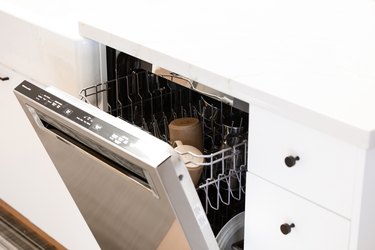
You're minding your own business cleaning up after dinner when you notice the dishwasher overflowing. How do you stop the suds and water from flooding your kitchen, and how do you prevent future issues? Several issues can cause the overflowing dishwasher, from dishwasher mistakes, like the wrong type of soap, to a malfunctioning component. Identifying the cause lets you correct the issue and keep your kitchen dry the next time you wash dishes.
Stop the Overflow
Video of the Day
Hit the cancel button on the dishwasher as soon as you notice the overflow. This should force the appliance to drain the water that's inside. While you wait for it to dry, grab towels or a mop to soak up the water and suds that have already overflowed.
Video of the Day
Once the dishwasher is empty, pull the dishes out of it and set them aside. If the dishwasher is still full of suds, you can sprinkle some salt on them to make them go away quicker, or you can pour water into the dishwasher. Now, you can investigate the cause of the dishwasher overflow to correct the issue.
Improper Type of Soap
One of the easiest problems to fix is using the wrong type of soap in your dishwasher. If you substitute your usual dishwashing liquid soap that you use in the sink, expect an overflow of suds and water. The same thing can happen if you use liquid hand soap or any other type of soap or detergent. Sometimes, dirty dishes might get some dish soap on them in the sink before you put them in the dishwasher, which can also cause excess suds.
To correct this issue, clean up the mess and rinse out the dishwasher well. Rinse all of the dishes inside the dishwasher at the time. Going forward, only use dishwasher detergent in the appliance and make sure everyone else knows this rule. Using dishwasher tablets makes it easy to portion the soap every time. Rinse dishes well before putting them into the dishwasher to ensure they don't have extra soap on them.
Malfunctioning Float Assembly
Your dishwasher has a float assembly that tells it when to shut off the water. Sometimes, the float assembly gets stuck or malfunctions and lets the water continue filling the appliance, resulting in the dishwasher overflowing. Find and check the float assembly, which is a cylindrical piece along the bottom of the dishwasher.
If it doesn't move up and down freely, it might be stuck. Clean gunk and mineral buildup on the float assembly to see if you can get it to move. If the float moves, there could be a malfunction in the switch. In this situation, you'll need to replace the float assembly to correct the issue.
Water Inlet Valve Issue
Another possible appliance malfunction that can cause overflowing is the water inlet valve, which allows water into the dishwasher. If something's wrong with it, the valve might allow water in the dishwasher even when you're not using it. The valve can also let in too much water when you're running the machine, resulting in overflow. A malfunctioning water inlet valve needs to be replaced.
Leaking Door Gasket
In some cases, the dishwasher is leaking rather than overflowing with excess water. This usually happens if the gasket around the door is damaged or not sealing properly. Visually inspect the dishwasher gasket to look for tears or worn areas. If it's damaged, replace the gasket. Sometimes, dried-on food can prevent the gasket from sealing, in which case a thorough cleaning might resolve the issue.
Clogged Dishwasher Drain
Another potential problem is a clogged dishwasher drain, which causes water to back up inside the appliance. The drain is usually at the back of the dishwasher, so check it for built-up food or gunk. Clean the drain well and test the dishwasher again to see if it still overflows or doesn't drain well. There could also be a kink or blockage in the drain hose, so check and correct it if necessary.