
How to Size Baseball Gloves for Kids
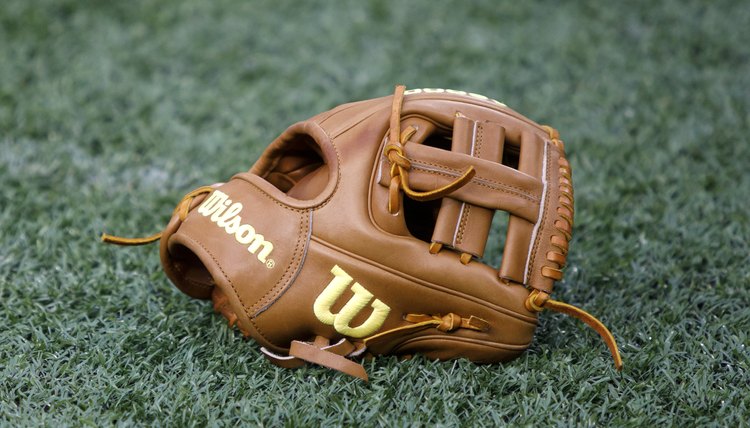
For many children, time spent on the baseball field is a huge part of spring. Many boys and girls play in leagues of all ages. For many parents this means a yearly trip for new equipment for their child athletes. An important factor in any new baseball equipment haul is a well fitting glove. A correctly sized baseball glove is important for any player; regardless of skill. A glove that is too small can be difficult and uncomfortable to use. A glove that is too large will frustrate a child because they will not be able to open and close it, and may lead to many dropped balls.
1. Determine position for your child
Determine if your child will need an infielder or outfielder youth glove. The outfielder glove is typically slightly larger than the infielder's and the glove will be labeled for each. Some children may require a first base glove if playing first as well.
Parents of younger children should not worry as the difference is minimal at younger ages. Most young children do not play specific positions anyway and tend to play in multiple places.
2. Find glove size based on age
Another important factor is finding the right glove for your child's age.
- A 5- or 6-year-old requires a glove that is 10 to 10 1/2 inches.
- A 7- or 8-year-old needs a glove that is 10 1/2 to 11 inches.
- A 9- to 12-year-old needs a glove that is 11 to 11 1/2 inches.
- A high school-aged child normally wears a glove between 10 1/2 to 11 1/2 inches.
Keep in mind older children typically have set positions, so an outfielder's glove would be slightly larger--in the 12- to 12 1/2-inch range for high school baseball players. Some children may have bigger hands for their age as well, so sizing up may be necessary.
3. Test glove for fit
When you are looking at buying a glove, be sure to have your child try the glove on for so they can see if it fits. All gloves are different so sizing can be sometimes deceiving.
- The glove should fit so the hand slides easily into the glove.
- When the hand is pointed toward the ground, the glove should not fall off.
- Make sure, though, the glove is not uncomfortably tight.
4. Determine if your child can use the glove
Along with testing for fit, test to determine if your child can open and close the glove. Some youth gloves are made so that from the time it is bought, the child will be able to open and close the glove easily.
Sometimes the leather is too hard to allow the glove to be easily opened and closed. That is OK for an older child willing to wear in the glove; however, this could discourage a very young baseball player. If a glove is too hard for a child, try pouring hot water into the palm of the glove to soften the leather up.
Tip
Do not purchase a glove that is too big with the idea the child will grow into it. This could cause the child to become frustrated. Smaller gloves are easier to control, which is important to consider when purchasing a youth glove.
Tips
- Do not purchase a glove that is too big with the idea the child will grow into it. This could cause the child to become frustrated. Smaller gloves are easier to control, which is important to consider when purchasing a youth glove.
Writer Bio
Rebecca Dyes-Hopping began writing as a professional in 2010. Dyes-Hopping's writing expertise include home improvement projects as well as family and animals. Dyes-Hopping currently writes for eHow. Dyes-Hopping graduated from Whittier Regional Vocational Technical High School with a certification in data processing in 1994.