How To

How to Start a Vegetable Garden

By eHow Home & Garden Editor
How to Start a Vegetable Garden
Rate: (288 Ratings)

Eating fresh-picked corn or vine-ripened tomatoes is a life-altering experience. But where do you start? How do you choose from racks of seeds, catalog after catalog and rows upon rows of nursery seedlings? Successful small-scale farmers know what and when to plant, and how to start the crops.

From Quick Guide: Gardening 101
Difficulty: Moderately Easy
Instructions
  1. Step 1

    Grow only those vegetables you enjoy eating. Give priority to those prized for incredible flavor when eaten fresh from the garden: sweet corn, beans and peas, tomatoes and young spinach, among others.

  2. Step 2

    Prepare a plot of flat ground that gets full sun nearly all day. Break up and turn the soil and add compost or other organic material (See How to Buy Soil Amendments). A full day of blazing sunshine is especially important if you grow vegetables in the cool weather of early spring, early fall or winter.

  3. Step 3

    Figure out how much growing space you have and plant accordingly. Lettuce, for example, can be grown in a solid mat, but tomatoes need to be spaced about 2 feet (60 cm) apart. Give pumpkins at least 4 feet (120 cm) of growing room. Growing requirements are provided on seed packets, in catalogs, and on nursery tags, as well as in books on growing vegetables.

  4. Step 4

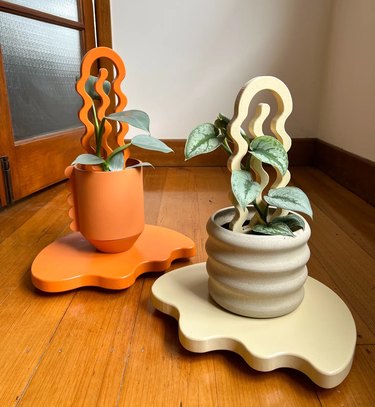
    Choose crops that require less room if you have a small vegetable garden or grow vegetables in a container. Lettuce is a great pot plant, and 'Patio' or 'Tumbler' tomatoes will grow well in a hanging basket. Plants that climb and vine, such as cucumbers and pole beans, can be trained up a trellis to take up less room horizontally. Tuck herbs and parsley into flower beds.

  5. Step 5

    Schedule plantings around the two main growing seasons which vary by region: cool (spring and fall) and warm (summer). Common cool-season vegetables include beets, broccoli, cabbage, carrots, cauliflower, lettuce, peas, potatoes, radishes, spinach and turnips. Warm-season crops include beans, corn, cucumbers, eggplant, melons, peppers, pumpkins, squash and tomatoes.

  6. Step 6

    Sow some seeds directly in the ground as they grow best that way: beans, beets, carrots, chard, corn, lettuce, melons, peas, pumpkins, squash and turnips. Starting seeds is, of course, much less expensive than planting seedlings sold in flats, packs and pots.

  7. Step 7

    Start with nursery seedlings of certain other crops unless you are an experienced vegetable grower. These plants tend to do better when set out in the garden as seedlings: eggplant, peppers, tomatoes, broccoli, cabbage and cauliflower. Squash and cucumbers are among a few you can plant just as effectively as either seeds or seedlings.

  8. Step 8

    Buy seeds at nurseries or by mail order starting just after the New Year, when the selection is freshest. Look for seed packets marked as having been packed for the current year.

  9. Step 9

    Buy vegetables online and from mail-order seed companies for a far greater selection than you'll find at neighborhood nurseries. Burpee (burpee.com), Johnny's Selected Seeds (johnnyseeds .com), Park Seed Company (parkseed.com) and Thompson and Morgan (thompson-morgan.com) are a few long-established sources.

  10. Step 10

    Shop for seedlings when your soil is prepared and you are ready to plant. Keep them moist and don't let them sit around for more than three days. Buy healthy and vigorous seedlings. They should stand up straight and be stocky, not lanky, with no yellow leaves or bug holes.

  11. Step 11

    Save money and get truly involved with your garden by starting seeds indoors in winter and transplanting them into the garden in spring. It's simplest to start with complete kits, sold at garden centers and through catalogs, containing fluorescent lights, soil mix, containers and watering devices.

  12. Step 12

    Sow seeds of colorful radishes or giant sunflowers to introduce children to the satisfaction and fun of growing their own food. Or lean 3 stakes together, tie them together at the top, and train pole beans up the stakes. Voila! A bean teepee.

Tips & Warnings
  • Shop for all kinds of seeds in early spring to midspring-- when selection is best--even if you don't plant them right away.
  • Plant cool-season seedlings during late winter if you live in a warm climate, such as the Southwest, Southern California or the South.
  • Keep extra seeds in an envelope in a dry, cool place, such as a plastic storage box in the basement. Many vegetable seeds can still sprout after a year or more in storage.
  • Just because you can grow zucchini doesn't mean you should.

Comments  

| View All 10 Comments
Flag This Comment

on 6/16/2009 This is an excellent article. I've been reading lots of books to get started with my vegetable garden. This article covers the main points of all those books. Very good job! 5 stars

maryanne09 said

Flag This Comment

on 5/29/2009 Great article on How to Start a Vegetable Garden! 5*'s :o)

carolina67 said

Flag This Comment

on 3/20/2009 I love the zucchini line most of all. Well written. 5* and rec.

BluthGuy said

Flag This Comment

on 1/31/2008 Hey everyone. Great article! If you want some nice video guidance, try this link - http://www.5min.com/Video/How-to-Grow-Vegetables-4891

member said

Flag This Comment

on 7/1/2007 How do i get rid of ants in my garden

Post a Comment

Post a Comment
I Did This

Related Ads

Copyright © 1999-2009 eHow, Inc. Use of this web site constitutes acceptance of the eHow Terms of Use and Privacy Policy.

eHow Home and Garden
eHow_eHow Home and Garden