Cleardesign1/iStock/Getty Images
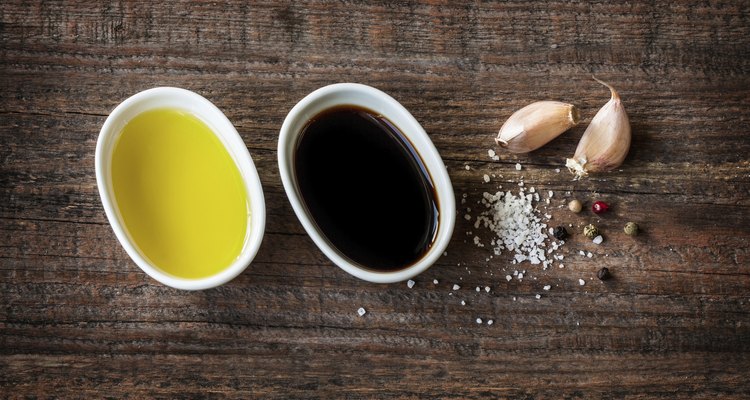
A basic vinaigrette enhances your favorite salad or sandwich. Mixing your own allows you to experiment with different vinegars and oils, and customize the taste to suit your preferences. Adjust the basic vinaigrette ratio -- three parts oil to one part vinegar -- to change the richness or tartness of your finished product. Feel free to add other flavor enhancers, such as salt, pepper, honey or mustard.
Add a pinch of salt, pepper or other spices to a mixing bowl. Measure 1/4 cup of vinegar for every cup of finished vinaigrette and pour it into the bowl.
Whisk together the vinegar and spices until combined.
Measure 3/4 cup of oil for every 1/4 cup of vinegar you use.
Add the olive oil slowly to the mixture with one hand while whisking with the other. Pour the oil into the mixture in a slow, steady stream to allows the ingredients to gradually come together. Continue to whisk the ingredients until well combined.
Pour the mixture into a jar with a lid or a clean salad dressing bottle. Store the mixture in the refrigerator until ready for use. If your mixture separates, simply give it a good shake to recombine.
Related Articles
How to Make Balsamic Vinegar Olive Oil ...

How to Ferment Whole Grains

How to Make Sour Cream Quickly With ...

How to Make Homemade Liquid Rouge

How to Cook Pork Tenderloin in a ...
How to Mix Your Own Vinegar & Oil for ...

How to Marinate Duck Breasts
How to Make Homemade Hair Mists
How to Make Warming Body Oil

How to Cook a Rolled Beef Chuck Roast ...

How to Make Italian Dressing

How to Store Homemade Salad Dressing
How to Substitute Mayonnaise for Sour ...
How to Measure the Acidity of Homemade ...

Homemade Coconut Pomade
How Do I Curdle Soy Milk With Lemon ...

How to Mix Baking Soda & Peroxide
Substitute for Italian Dressing
Homemade Facials to Clear Blemishes
How to Use Shea Butter on Natural Hair
References
Tips
- A basic vinaigrette features olive oil and balsamic vinegar, but you may substitute any oil for the olive oil. You can also try alternative fats, such as browned butter or rendered bacon fat, for example. Instead of balsamic vinegar, you may choose any fruit or wine vinegar, lemon or orange juices, or pureed fruit.
- Adding an emulsifier -- such as mustard or egg whites -- to your oil and vinegar helps keep it from separating.
- For a creamy vinaigrette, add pureed avocado instead of oil. The creamy texture also works as an emulsifier to keep the oil and vinegar combined.
- Experiment with seasonings, such as mustard, garlic and shallots. Always add spices and additions to your vinegar and whisk together before adding the oil.
Warnings
- If you are short on time, combine all of the ingredients in a jar with a lid and simply shake to combine. While this will work in a pinch, it will not combine the ingredients as well as the whisking method.
Writer Bio
Deborah Lundin is a professional writer with more than 20 years of experience in the medical field and as a small business owner. She studied medical science and sociology at Northern Illinois University. Her passions and interests include fitness, health, healthy eating, children and pets.
Photo Credits
Cleardesign1/iStock/Getty Images