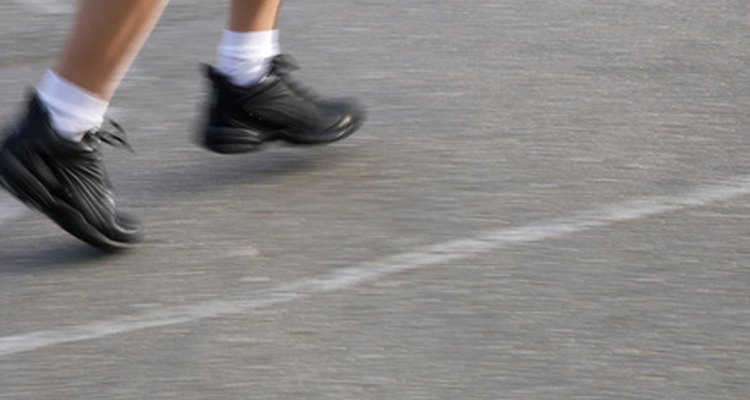
Don't wear just any old sneakers to run or jog. They may not provide the support and comfort you need, resulting in foot or lower-back pain. Running shoes offer more benefits than regular sneakers, since they are designed specifically for running. Keep these features in mind for when you shop for running shoes.
Outsole Characteristics
The outsole is the bottom of the running shoe. A quality running shoe will have two types of rubber on the outsole: carbon rubber and blown rubber. Carbon rubber is a stiff and heavy material, while blown rubber is lighter-weight, cushioned and flexible.
Good running shoes have flex grooves and a split heel. Flex grooves are cut horizontally across the forefront of the outsole. They allow your foot to flex at the ball and roll more naturally when you are running. A split heel creates an outer and inner piece of the outsole. The split heel makes heel-to-toe running more efficient.
Midsole Characteristics
The midsole is the shock-absorbent material between the outsole and the upper shoe. This is an important part of a running shoe because the construction and materials impact cushioning and support of the shoe. There are usually two types of cushioning found in good running shoes. EVA is a lightweight cushion with limited stability and durability. Polyurethane is more dense and stable, making it heavier. Try shoes with the different types of midsoles so you have a better idea of how they feel.
When looking for overall stability in a running shoe, look for stiff materials used in the midsole. These materials are in the inner or medial part of the shoe in order to prevention excessive inward rolling. Heavier-dense materials may also be in the medial part of the shoe to increase stability. This could be a big plus if you choose a running shoe with EVA cushioning. If you’re not sure what materials are in the running shoes, ask a salesperson.
Upper Characteristics
The upper is the outer body of the running shoe. The materials that make up these running shoes are lightweight mesh and heavy-duty leather. These materials provide stability, comfort and a snug fit. Features of these running shoes would include a last, toe box, heel counter and Achilles notch.
A last is the shape of the running shoe. Running shoes will come in three different shapes: straight, semi-curved and curved. These different shapes will vary in comfort depending on how they conform to your particular foot. The toe box is the front part of the shoe that should allow your foot to flex. Never wear running shoes with a too-small toe box, which can cause pain and cramping. Allow about an inch (or a thumb’s width) space between your longest toe and the front of the shoe. Heel counters are a material that reinforces the heel and promotes stability. They may come in different degrees of stability and stiffness. Lastly, the Achilles notch is a groove that protects the Achilles’ tendon from pulling or tearing by providing a more secure fit.
Related Articles

Internal Bruises on the Inner Knee From ...
Shoe Sole Materials

Pros and Cons of Rocker Sole Sneakers
How to Determine the Width of ...
How to Wear Steel Toe Shoes

What Do the Numbers Mean on New Balance ...

How to Avoid Bending Your Uggs
How to Lower a Boot Heel
The Differences in Men & Women's Shoes
How to Clean TEVA Sandals
How to Add Arch Support to Shoes
Low Vs. High-Top Athletic Shoes
How to Break in Birkenstock Clogs
The Best Cushioned Shoes for Overweight ...
How to Replace a Sole on a Timberland ...

Types of Nike Shoes
How to Change the Soles on Nike Air ...

Shoes That Elongate the Leg
How to Install a New Insole in a Shoe

How to Make Sneakers Not Slippery
References
Writer Bio
Based in Massachusetts, Chanel Adams has been writing since 2009. Her work has been published by the "Lowell Sun," MadeMan.com, Coed Media and other print and online publications. She has knowledge in fashion, careers, health, education, computers and electronics. Adams has an Associate of Science in administrative medical assisting from San Joaquin Valley College.
Photo Credits
run image by Alexey Klementiev from Fotolia.com