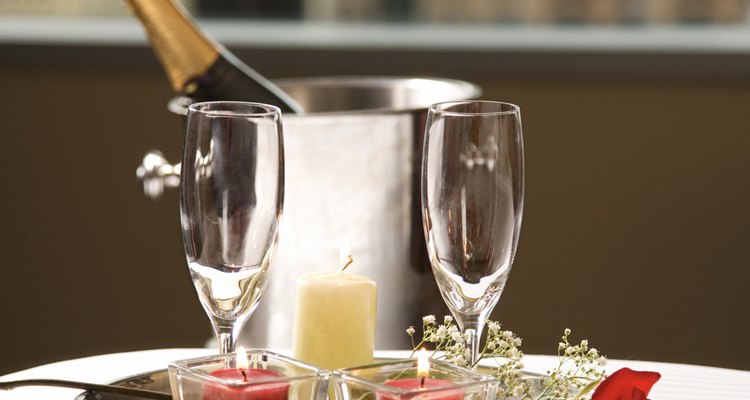
How to Enjoy Champagne

How to Enjoy Champagne thumbnail
To enjoy Champagne, you should understand its history.

During the decades after the Champagne region in France was bombed in World War II, the popularity of the nectar exploded. In the 20 years following the war, worldwide consumption of champagne quadrupled and is still rising. If you want to enjoy Champagne, you'll need to understand its history, key facts about production, and how to prepare, pour and serve it properly. Does this Spark an idea?

Instructions

  1. Choose a Bottle of Champagne

    • The four main points to consider when selecting a champagne are as follows: marque; vintage; size of bottle; and dryness. The first thing to determine is the brand and year you want. By definition, Champagne comes only from that region of France that bears the same name. Specifically, the Champagne region is 90 miles northeast of Paris, close to the border with Belgium. Champagnes typically come from one of three areas within that region: Reims; Marne; or Cote de Blancs. Unlike most wines that are named after vineyards, Champagnes are named for the houses that produce them. These houses, in turn, produce various brands of Champagne, known as marques. The list of famous Champagne marques is relatively short, so if you can remember it--or a few items on it--you will never fail to find something familiar in a liquor store or on a restaurant menu.

      Marque areas of the Champagne region are: Bollinger Ay; Charles Heidsieck; Reims Krug; Reims Moet et Chandon; Epernay G.H. Mumm; Reims Joseph Perrier; Marne Ruinart; Reims Taittinger; Reims Veuve Cliquot-Ponsardin. Taste many different marques to determine your preference.

      As with any wine, quality varies across the years, in harmony with the quality of the grapes harvested that year and the weather of the harvesting season. Unlike many wines, however, one needn't sample decades worth of Champagnes to identify a good year. Champagne is typically held for up to five years by the manufacturing house, but when it is eventually released for purchase, it should be consumed within two years. Choosing a relatively young Champagne, therefore, is not considered gauche.

      Also, Champagne is often blended across years. For a Champagne to be considered of a particular year's vintage, at least 80 percent of the grapes used in producing it must have been harvested in that year. The remaining 20 percent of the grapes, therefore, can be from other years. Vintners, accordingly, blend their Champagnes with the "greatest hits" from across the years, which leads to a more uniform quality of beverage. This is yet another reason choosing any particular vintage of champagne is not that important--all those of a given marque are similar.

      One thing that is a little trickier about Champagne is the size of the bottle. Consider: A quarter-bottle is 6.3 fluid oz.; a half-bottle is 12.7 fluid oz.; a bottle is 25.4 fluid oz.; a magnum is 50.8 fluid oz.; 2 bottles Jeroboam are 101.6 fluid oz.; 4 bottles Rehoboam are 147 fluid oz.; 6 bottles Methuselah are 196 fluid oz.; 8 bottles Salmanazar are 304.8 fluid oz.; 12 bottles Balthazar are 406.4 fluid oz.; and 16 bottles Nebuchadnezzar are 508 fluid oz.

      If you are dining alone or want to order champagne to accompany dessert, it is best to order a half bottle, which will pour out to slightly more than two full glasses.

      The last variable in choosing a Champagne is its level of dryness. Champagne is not alone among wines in occurring in various levels of dryness, but it is distinctive in that the dryness is largely determined by the winemaker. Grapes usually are chosen at the height of their ripeness, when they contain a good deal of natural sugar. Yeast is added to the juice of those grapes, which converts their ample sugar into ample alcohol. The Champagne region, however, is an atypically cool region of France, in which grapes must be harvested before they are fully ripe. Their sugar content, therefore, is too low to make an alcohol of comparable fortitude. Champagne thus has sugar artificially added to it so the yeast has more fuel to convert into alcohol. Obviously, a winemaker can add greater or lesser amounts of sugar to alter the strength of the finished product--and, of course, adding more sugar is going to make the Champagne taste sweeter, too. As you enjoy more and more glasses of Champagne, you will develop a taste for whether you prefer it dry or sweet.

      Level of dryness refers to the amount of residual sugar per liter. The different levels include Extra Brut, Brut Sauvage, Ultra Brut, Brut Integral, Brut Zero 0.6 percent, Brut 1.5 percent, Extra Dry, Extra Sec 1.2 to 2.0 percent, Sec 1.7 to 3.5 percent, Demi-Sec 3.3 to 5.0 percent, and Doux (sweetest) 5 percent and up.

      Even if you are a sweet tooth, Champagnes rated as Doux should be used only as dessert wines. Champagne makers save their best grapes for the Brut category.

Next: Know the Facts

Related Searches:
  • Photo Credit champagne image by Sean Wallace-Jones from Fotolia.com

Comments

You May Also Like

  • The Best Champagne Truffles

    A champagne truffle is chocolate candy made of a chocolate or cream ganache center and coated in a chocolate or sugar powder....

  • How to Pair Champagne with Appetizers

    Thanks to champagne's sparkling personality and appetizers' easy-going appeal, the two make a great pair. Whether it's a quiet dinner party at...

  • Champagne Classification

    The classification protocol for sparkling wines from the Champagne region of France, as for other wines, is known as appellation. This classification...

  • Foods to Serve at Champagne Tastings

    Produced in the Champagne region of France, Champagne is made from Chardonnay, Pinot Noir or Pinot Meunier grapes. There are three distinctive...

  • How to Enjoy Vintage Champagne

    Champagne has a long history of representing some of the finest wines on earth. However, despite its reputation as the beverage of...

  • What Is Brut Champagne?

    Let's propose a toast: To Brut Champagne--today's most popular and most consumed sparkling wine. It is the beverage of choice for weddings,...

  • About Champagne Storage

    Champagne refers specifically to sparkling wines produced in Champagne, France. The creation and consumption of the beverage dates back before Medieval times...

  • How to Enjoy Reims Cathedral

    Notre-Dame de Reims, or Reims Cathedral, is a Gothic-era cathedral dating to the early 13th century. It was constructed to replace a...

  • How to Chose a Bottle Champagne

    If you are a novice champagne enthusiast, then this little guide is for you. It will go over some of the basic...

  • How to Pair Food With Champagne

    Though usually reserved for toasts, champagne can be the perfect drink to serve at your next cocktail, holiday or dessert party. One...

  • How to Select Good Champagne

    Champagne instantly conjures up images of festive celebrations, but there's no need to wait for a special occasion to break out the...

  • What is Champagne?

    Champagne is a sparkling white wine that is made from grapes grown in the Champagne region of France. Drink champagne, or similar...

  • List of the Different Types of Champagne

    Champagne is ubiquitous at celebrations, holidays and special events, but not all sparkling wines are actually champagnes. Champagne is a special variety...

  • Different Brands of Champagne

    With over 12,000 brands of champagne to choose from, there is certainly no lack of variety in the marketplace. You may be...

  • How to Tell a Good Champagne by its Bubbles

    eHow Food, Rachael Ray and her Buddies want to show you how to get more out of every day, every meal and...

  • How to Choose Champagne for a Special Occasion

    We use champagne, the "Wine of Kings," to celebrate some of the most important occasions in our lives. The next time you...

  • Wine Types Explained

    Wine Types Explained. While there are thousands of wine selections and brands, six major groups of wine -- white, red, rosé, dessert,...

  • How to Do a Champagne Toast

    Giving a champagne toast can be a daunting task, particularly for those not used to speaking in public. You want your toast...

  • About Moet Champagne

    Moet Champagne, also known as Moet et Chandon Champagne, is a luxury champagne of world reknown. To truly appreciate the experience of...

Related Ads

Know Your Knives: Josh Ozersky’s Comprehensive Guide

I have a lot of knives. You probably do too. I really don’t know what to do with them all. There’s a Chinese cleaver, aï؟½

Featured