Virgil Klunder, executive director of Pocket Pets, regales the bonding experience between people and their sugar gliders and encourages new owners to spend as much time as they can with their new pet. Bonding with your sugar glider helps with the training process. Since sugar gliders are clean animals by nature, they respond well to potty training.
Pet Sugar Glider
Video of the Day
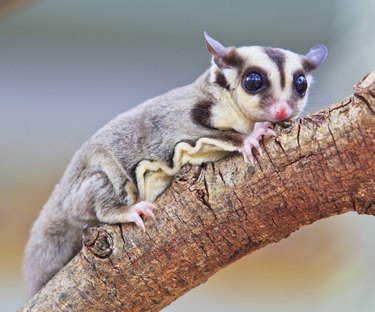
Among exotic pets, sugar gliders (Petaurus breviceps) have proved themselves as congenial household companions. Before coming to America, this diminutive marsupial hails from Australia, Papua New Guinea and the associated Pacific regional islands and archipelagos. Named for his penchant for sweet fare and ability to glide among the treetops, this arboreal pet is social by nature and prefers continuous company. Often acquired in pairs, sugar gliders enjoy interaction with humans. Understanding your sugar glider's nature and habits is the first step to potty training.
Video of the Day
Potty Training Your Sugar Glider
Sugar gliders are predictable in their bathroom habits, making potty training pretty easy. Gliders cannot be trained to a litter box; but once you learn their sleep schedule, appropriate potty placement is possible. By nature, sugar gliders are clean animals who will not relieve themselves where they sleep. Immediately upon awakening, sugar gliders are looking to go. For potty training your sugar glider, you will need unscented baby wipes. Picking up your sugar glider, use the baby wipe to stimulate urination and bowel movement. Do this by gently rubbing his bottom and genital area with the baby wipe. It helps to rub his belly at the same time. After he relieves himself, switch your sugar glider from hand to hand for a few minutes. This exercise activity will stimulate his digestive tract, ensuring all excrement and urine gets released. Finally, repeat the first step by massaging his bottom again for about one minute. Never stop the process in the middle. His potty process can take anywhere from one to five minutes.
Diet and Nutrition
As long as your sugar gliders are fed an appropriate and timely diet, they should have routine and predictable bowel movements. In the wild, sugar gliders are opportunistic and seasonal omnivores -- what they eat depends on the time of year. During the summer they are insectivorous, eating insects and spiders. In wintertime, when live fare is scarce, they exist on eucalyptus sap, plant and fruit tree nectar, acacia gum, honey dew bark and manna. Commercial foods are available to meet all of your pet marsupial's needs, but most sugar glider parents supplement their pets' diets with fruits, vegetables and other healthy snacks.
Cleaning Up After Your Sugar Glider
The bottom of your sugar glider's confined habitat accumulates debris. Special cage liners are available, and these are a safe and simple way to keep your pets' cage floor clean. Never line the habitat with magazines, newspaper, or any printed material because the chemicals used for processing are harmful to sugar gliders. Change these liners daily to ward off harmful bacteria buildup. Clean and replenish water bowls and food dishes daily. Remove bedding material from sleeping pouches and nest boxes weekly. Always use cleaning solutions labeled safe for pets. A formula of 3 parts water to 1 part bleach serves cleaning. Perform a thorough habitat cleaning once a month. At this time, wipe down the entire habitat and remove and clean all accessories. This will remove any scent-marking odors and debris from old food.