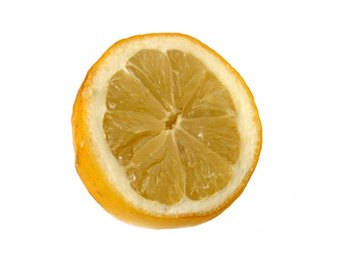
Electricity and the various forms in which it is ever present is something that seems to capture the imagination of young and old alike. Experiments that demonstrate the energy present in surprising and even sometimes banal containers such as vegetables and fruit can catch a person off guard or inspire him to greater quests for understanding the invisible forces that surround him every day. Making a lemon battery could be just such a transformational experiment.
Setting up the Experiment
- Galvinized Nail
- Paring knife
- Copper penny or other copper coin
- Lemon
- Volt meter
Try to select a fresh lemon with a lot of juice for the best results Gently squeezing the lemon prior to beginning the experiment may also help. In order to light a light bulb or other small electronic device, more lemon batteries can be wired together in a circuit.
Set the lemon on a flat, level surface. Insert the galvanized nail through the lemon peel and into the center of the lemon making sure that the point does not exit through the other side.
At the opposite end of the lemon, using the paring knife make a small slit in the lemon peel. Insert the penny into this slit and continue to push until only about a quarter of the penny remains above the peel.
In order to see the amount of voltage created by the lemon battery, a voltage meter is required. Attach the red wire clamp to the penny and the black wire clamp to the nail in order to see the lemon battery at work.
Things You'll Need
Tips
References
Tips
- Try to select a fresh lemon with a lot of juice for the best results Gently squeezing the lemon prior to beginning the experiment may also help.
- In order to light a light bulb or other small electronic device, more lemon batteries can be wired together in a circuit.
About the Author
Susan Deily-Swearingen has been writing since 2005. She blogs at The Huffington Post and has contributed to "The Pensacola News Journal," "The Newburyport Daily News" and "The Town Common." Deily-Swearingen holds a Master of Arts in academic theater from Brown University.
Photo Credits
lemon image by Henryk Olszewski from Fotolia.com