What Are Rugby Balls Made Of?

What Are Rugby Balls Made Of? thumbnail
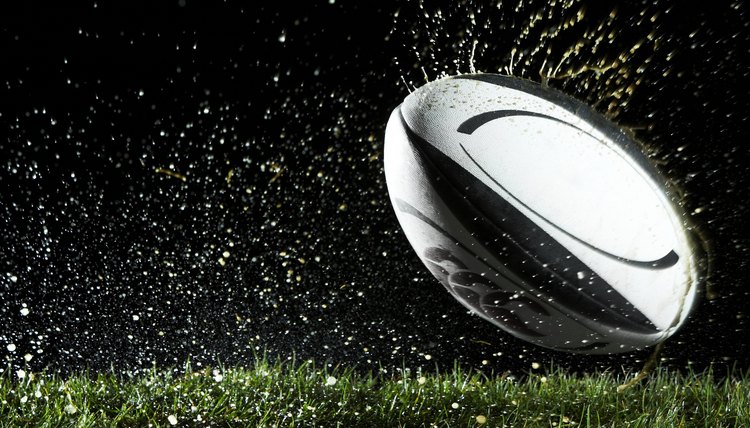
Modern rugby ball, courtesy /www.ssr-uk.com
  1. Traditional Rugby Balls

    • Traditionally, rugby balls were created by stitching four panels of leather by hand around a pig bladder, although sometimes six or eight panels were used instead. The bladder was then inflated with air and sealed. This led to a wide variety in the shape and size of rugby balls when the game was being finalized. Most had a roughly oval or round shape given by the pig's bladder, but there was no set standard for shape and the oval cast of modern rugby balls was beyond the skill of original leather workers.

      It was not until the late 1800s that formal rules were established to govern how the rugby ball was created and what specifications it had to meet. Although weight standards varied for several decades, they hovered consistently around 13 to 14 ounces. The leather was still required to be hand-stitched at this time, with no fewer than eight stitches to every inch of length covered.

    Modern Laws

    • Modern rugby ball, courtesy /www.ssr-uk.com

      Even today, the International Rugby Board requires rugby balls to be made of four individual panels stitched or sealed together, though hand stitching has long been replaced by machine processes. The material is still made out of leather or from a variety of synthetic substances. The surface of the ball is usually dimpled to help in gripping, but star-shaped patterns and other unique patterns are also used to help players retain an even stronger hold on the ball.

    Modern Materials

    • Synthetic substances include synthetic rubber, polyurethane coatings, microfiber materials and PVC. When it comes to the material, there is generally considered to be a give and take, with natural leather providing a better grip while synthetic materials last much longer. Different rugby balls are made based on their uses.

      Training balls, which are used much more often than balls for official games, are made of long-lasting materials and have durability coatings to help make it wear and weather proof. Some training balls are weighted to help players in specific practices. Leather is more commonly used in official balls, which also have inflation valves in the seams to help make the ball more buoyant.

Related Searches:

References

Comments

You May Also Like

Related Ads

Featured