

How to Use Lye in Toilets

Lye is a strong alkaline solution made from sodium or potassium hydroxide. It is used in soapmaking and for cleaning and opening drains. If your toilet becomes clogged, sprinkling a small amount of lye in the toilet will help unclog it.
Before using lye, carefully read the manufacturer's instructions for use of the product.
-
Place a plunger in the toilet. Push down on the toilet to try to unplug or unclog the toilet.
-
Add the appropriate amount of lye into the toilet, following the manufacturer's directions. Wait the amount of time recommended by the manufacturer.
-
Flush the toilet. If the toilet flushes normally, the drain is cleared. If the toilet does not drain, or is slow draining, repeat Step 2. Never plunge or snake a drain once chemicals have been added.
The Drip Cap
- Lye is a strong alkaline solution made from sodium or potassium hydroxide.
- Add the appropriate amount of lye into the toilet, following the manufacturer's directions.
- Never plunge or snake a drain once chemicals have been added.
Writer Bio
Kallie Johnson began her writing career in 2009, contributing to various online publications. She holds a Bachelor of Arts in English from the University of Nevada, Las Vegas. She enjoys writing home and garden topics and considers herself an expert on do-it-yourself home improvement topics.
Photo Credits
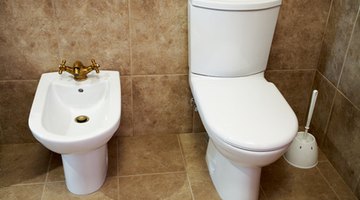
- Toilet bowl and bidet in a toilet image by terex from Fotolia.com
- Toilet bowl and bidet in a toilet image by terex from Fotolia.com
More Articles

