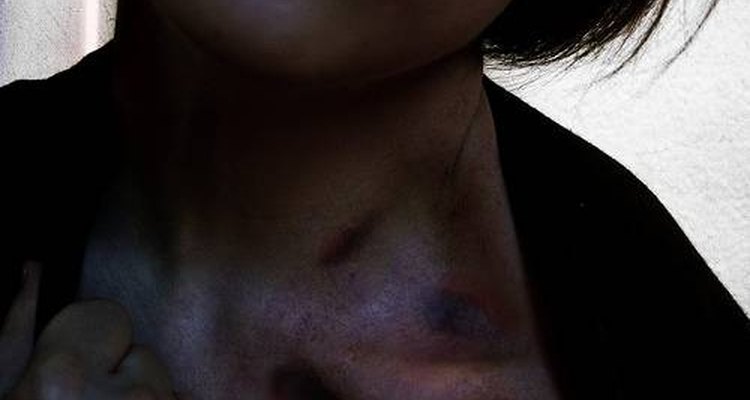
Relationship abuse occurs in heterosexual and homosexual relationships, dating relationships and marriages. Victims and abusers can be male or female. Relationship abuse occurs when someone uses abusive behaviors to control and manipulate another person.
Types of Relationship Abuse
Relationship abuse doesn't just mean that someone is being hit, punched, kicked or physically hurt. A person can be abused emotionally, which means that another is controlling, manipulating and exerting power over her. This includes name-calling, humiliation and threats. People can also be abused sexually in relationships. A woman who is married and has consented to sex in the past can be sexually abused by her husband if she does not want to have sexual intercourse and he forces it upon her.
Ways People are Abused
Some victims of relationship abuse are physically abused. One way people abuse others is through exhibiting dominance, because they want to be the one in charge of the relationship. Abusers humiliate their partners to reduce their self-worth and exert power. Another way abusers use their power is to isolate their victims from friends and family. People become more vulnerable if they don't have support systems. Abusers also scare their victims with threats and intimidation tactics. Someone being abused may be made to feel that it is their fault. The abuser puts the blame on the victim.
Signs of an Abusive Relationship
Here are 10 signs that you or someone you know is in an abusive relationship: 1. You feel afraid of your partner. 2. You feel like you can never do anything right and are always blamed for things. 3. Your feel helpless and hopeless. 4. You feel like you are always walking on eggshells and afraid of angering your partner. 5. Your partner threatens to hurt you, your pets or your family. 6. Your partner humiliates you. 7. Your partner makes fun of you regularly. 8. Your partner blames you for his anger. 9. Your partner is extremely jealous. 10. Your partner doesn't allow you to see friends or family members.
What Can People Do?
If you're not being abused and want to help others who are being abused, you have many options. If you hear domestic violence happening at a neighbor's house, call the police. Talk to friends and family members about the signs of abuse. Reach out to someone who you believe might be abused by his partner. Give assistance to domestic violence shelters or volunteer at a domestic violence shelter or hotline.
Barriers to Leaving an Abusive Relationship
Many people wonder why victims of abuse don't leave their current relationships. One reason may be that the victim is in danger if she leaves the relationship. The abuser could seriously hurt her, a family member or her children. Another reason that victims stay in abusive relationships is due to financial reasons. A victim may not be able to support herself and her children without the abuser. If you know someone in an abusive relationship, listen to her reasons for staying in the relationship. Understanding these reasons can make you a better resource for this person.
Related Articles

Excessive Jealousy & Possessiveness

What Is a Harmful Relationship?
Signs That You Are Being Mentally ...

What is Emotional Abuse?

What Causes People to Commit Adultery?

Signs of Verbal Abuse in Marriage

Effects of Verbal & Emotional Abuse in ...

Healthy & Unhealthy Jealousy

Signs of Insecurity in a Relationship

How to Overcome an Abusive ...

Signs a Wife Is Verbally Abused

Silent Treatment Abuse
What are the Signs of a Verbally ...

Signs of an Emotionally Abusive Husband

The Effects of an Abusive Relationship

Psychological Effects of Fatherlessness

Signs of Verbal Abuse

How to Not Be Inconsiderate

How to Handle a Person Who Gets Mad ...

Characteristics of a Verbally Abusive ...
Writer Bio
Michelle Bolyn is a licensed mental health professional and has worked since 2006 as a therapist. Bolyn has been writing mental health, wedding-related and relationship focused articles since 2007. She is published on Suite101.com and Examiner.com. Bolyn received her master's degree in social work from New York University.
Photo Credits
Domestic Violence by SashaW