How Are Isotopes Used in Biological Research?

  1. Isotopes

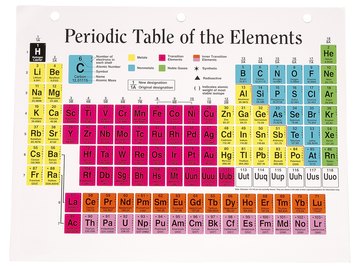
    • Isotopes for a given atomic element are a variety of atoms with the same number of protons, but a different number of neutrons.

      Isotopes occurring naturally in an organism or injected can be used for imaging internal structure and function. This includes, but is not exclusive to, highly radioactive, short-lived radioisotopes.

      Longer-lived radioisotopes are useful for placing organisms in the geological record, aiding determination of evolutionary rates.

    Nuclear Magnetic Resonance Imaging (NMRI)

    • NMRI is a visualization technique used to image the internal bodily structures and functions. Isotopes naturally occurring in the body that have a magnetic moment will precess around an axis along the direction of a strong external magnetic field. Hydrogen isotopes in water molecules throughout the body are commonly used.

      Protons with a magnetic moment enter a state of excitation when the magnets of the NMRI scanner are on. When the magnetic fields are turned off, the protons release their excitation energy at resonance radio frequencies that are detected by the NMRI scanner. Difference in tissues is measurable because the protons in different tissues return to their equilibrium state at different rates. Position of physiological structures can be determined by varying the magnetic fields, and because resonance frequencies differ by the strength of the magnetic field, and therefore by the distance to the magnets.

      Because difference in tissue can be imaged, so can blood flow, which has been useful in, for example, mapping brain function.

    Radioactive Isotopes

    • Radioisotopic labeling is the injection of radioactive isotopes into a system and mapping the course of the injected substance with a scanner.

      A well-known example is the positron emission tomography (PET) scan. If the injected tracer is fludeoxyglucose (FDG), then the imaging will show tissue metabolic activity, because the FDG is similar to glucose and would be spiked with the positron-emitting radioactive isotope fluorine-18.

      Because different molecules are absorbed by different tissues, a wide arsenal of radionuclei has been accumulated. For example, phosphorus-32 and -33 are used to label nucleotides, the basic units of DNA. Sodium-22 and chloride-36 are used to study ion transport. Tritium and sulfur-35 are used to label amino acids and proteins.

      In vivo examinations substitute with fluorescent dyes where possible, to avoid an unnecessary exposure to radioactivity in the patient.

    Stable Isotopic Labeling

    • Stable isotopic labeling is isotopic labeling but without the use of radioactive isotopes.

      An example is stable isotope labeling with amino acids in cell culture (SILAC), in which two cell populations are fed amino acids using different isotopes. Instead of detecting radioactivity in a single sample (for example, a patient), the two (nonradioactive) isotopes used in separate cultures are differentiable by weight. Specifically, the weight difference is detected by mass spectrometry.

      Because SILAC can trace amino acid metabolism and protein synthesis, it is useful in studying signaling between cells, protein-protein interactions and the regulation of gene expression.

    Radiometric Dating

    • Radiometric dating is the use of the known decay rate of an isotope to date the introduction of the isotope. Radiocarbon dating, used to determine the age of carbonaceous materials, is the most widely known example of radiometric dating.

      For example, the unstable isotope carbon-14 is renewed in the upper atmosphere by cosmic rays. If one knows from tree ring or glacial ice core samples the atmospheric ratio of carbon-12 to carbon-14 ingested by living organisms at a certain date, then one can accurately estimate the age of animal remains as far back as 26,000 years ago.

      For older samples, such as fossils, other radiometric dating methods are available, which enable the deduction of rates of evolutionary change.

Related Searches:

References

Resources

Comments

You May Also Like

  • What Are Radioactive Isotopes?

    Radioactive isotopes, also called radioisotopes, are atoms with a different number of neutrons than a usual atom, with an unstable nucleus that...

  • Isotopes Used in Biology

    Isotopes are variations of chemical elements containing different numbers of neutrons. Because isotopes are recognizable, they provide an efficient way to track...

  • Use of Radioactive Isotopes

    Many radioactive elements or their compounds are used in tracing various processes met with in the medical field, agriculture, industry and analytical...

  • Radioisotopes for Cancer Treatment

    Diagnosis of cancer is seen by some as a guaranteed appointment with chemotherapy and radiation treatments, if not eventual death. Therefore, the...

  • Ways Radioisotopes Are Used in Biology

    Isotopes are atoms of an element that contain the same number of protons and electrons but have a different number of neutrons....

  • How to Find Isotopes

    Every atom has a certain number of protons, electrons and neutrons. Protons carry a positive charge, electrons carry a negative charge and...

  • About Radioactive Dating

    Mankind has made some incredible scientific discoveries and radioactive dating is one of them. Also called radiometric dating, this technique is used...

  • The Efficacious Uses of Stable Isotopes

    An element frequently has a number of different isotopes. For example, hydrogen, deuterium and tritium are three isotopes of the element hydrogen....

  • Uses of Radioisotopes in Carbon Dating

    Uses of Radioisotopes in Carbon Dating. The discovery of radiocarbon dating resulted from studies of radioactive isotopes in the 1930s and 1940s....

  • Side Effects of Isotopes Used for Medical Purposes

    Technology changes on an almost daily basis, and the field of medicine sees these changes almost as frequently. Nuclear medicine has had...

  • How to Find Biological Parents

    The search for biological parents is an emotional journey for all who are involved. A person might seek biological parents to find...

  • What Is the Isotope of Phosphorus?

    An isotope of a chemical element is an atom with a different atomic mass. There are 23 different isotopes of the chemical...

  • How to Calculate Radioactive Decay in Excel

    The rate of radioactive decay is measured by an isotope's half-life, which is the time it takes for half of a radioactive...

  • Fluorine 18 Uses

    Fluorine 18 Uses. Fluorine 18 (F 18) is a radioisotope of the element fluorine. This positron-emitter plays a key role in positron...

  • The Use of Hydrogen Isotopes

    Hydrogen has three isotopes, called hydrogen or protium, heavy hydrogen or deuterium, and tritium. The first two--protium and deuterium--occur in nature in...

  • How Is Age Calculated Using Radioactive Dating?

    Determining the date of fossils or artifacts is done through the process of radioactive dating, which uses the known half-life of a...

  • Uses for Radioactivity

    A stable element and its radioactive isotope possess identical properties, hence a radioactive isotope enters into exactly the same chemical and biological...

  • What Is the Isotope of Hydrogen?

    Isotopes are atoms of an element that have a different number of neutrons than the standard version of the element. Isotopes have...

  • What Is Selenium?

    Selenium is element number 34 on the Periodic Table of the Elements. It is a nonmetal located in the same column as...

  • 10 Things an Oceanographer Would Use

    Tools used by oceanographers include in-water instrumentation, remote sensing satellites, nets, chemical isotopes, sea floor maps and computer models. Find out how...

Related Ads

Featured