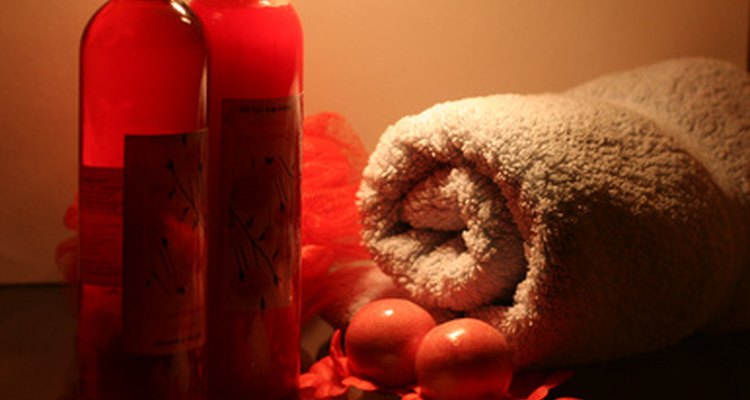
The cost of shampoo can add up over time, and many of the shampoos on the market today contain ingredients that are not natural and can dry your hair. A homemade shampoo with glycerin will moisturize your hair--glycerin is a humectant, a compound that absorbs and retains moisture. You can make homemade shampoo with glycerin that is unscented and consists of natural products for a fraction of the cost of store-bought shampoos.
Olive Oil, Soap and Glycerin Shampoo
Use a cheese grater or food processor to grate a bar of Castile soap until you have ¼ cup.
Pour ¼ cup hot water into a small bowl. Add the grated soap and stir until the soap has dissolved.
Add 2 tablespoons glycerin and ½ teaspoon olive oil. Stir with a spoon to combine the ingredients. Allow the shampoo to cool for a few hours to room temperature before use.
Chamomile and Glycerin Shampoo
Boil 1 ½ cups water in a small saucepan. Place 4 chamomile tea bags into the pan and let them steep for 10 minutes.
Remove the tea bags and add 4 tablespoons pure soap flakes. Stir the mixture until the soap flakes dissolve.
Add 1 ½ tablespoons glycerin to the mixture. Stir thoroughly to combine. Allow the shampoo to cool for a few hours to room temperature before use.
Related Articles
How to Make Homemade Dead-Sea Salts ...
How to Make a Homemade Water-Based Hair ...
How to Make Organic Shampoo at Home
How to Make Calendula Tea

What Is Glycerine Used For?
How to Wash Kanekalon

How to Make a Lip Mask for Extremely ...
Benefits of Soybean Oil for Hair
Pantene Shampoo Information
How to Remove Dandruff With Baking ...
Homemade Conditioner With Jojoba Oil
How to Use Sage to Color Hair
How to Add Citric Acid to Castile Soap
How to Make Purple Hair Dye From Kool ...
How to Use VO5 Products

How to Make Anti-Wrinkle Moisturizing ...
How to Make Medicated Soap
How to Make Fresh Strawberry Frosting ...
Essential Oils That Make Hair Smell Good
Types of Hair Treatment
References
Writer Bio
Kimbry Parker has been writing since 1998 and has published content on various websites. Parker has experience writing on a variety of topics such as health, parenting, home improvement and decorating. She is a graduate of Purdue University with a Bachelor of Arts in organizational communication.
Photo Credits
red shampoo articles image by Julia Britvich from Fotolia.com