
How Do Pine Trees Reproduce?

How Do Pine Trees Reproduce? thumbnail
How Do Pine Trees Reproduce?
  1. Pine Cones

    • Cluster of Male Cones

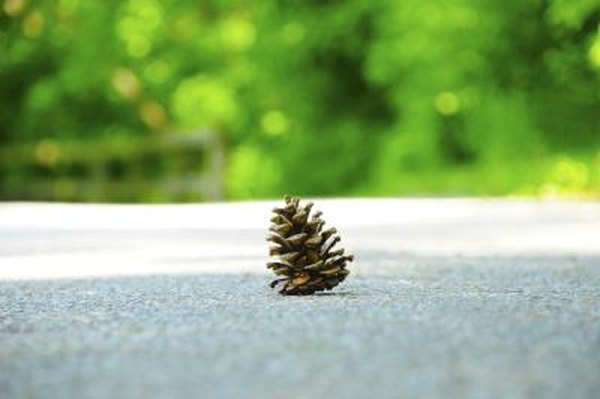
      Pine trees reproduce by producing seeds. Unlike deciduous trees, which produce seeds that are surrounded by fruit, pine seeds are located on scales of structures called cones (pine cones). Pine trees possess both male and female reproductive structures, or cones. Both male and female cones are on the same tree. Typically, the male cones that produce pollen are located on the lower branches of the tree. This is to prevent the pollen from falling on the female cones of the same tree and, thus, promotes fertilization with other pine trees, which enhances genetic variation among trees. The male cones, also known as catkins, are present only during the spring of the year when they are producing pollen. They do not look like the pine cones many are familiar with, but are long thin structures that are soft and located in clusters on the branches.

    Fertilization
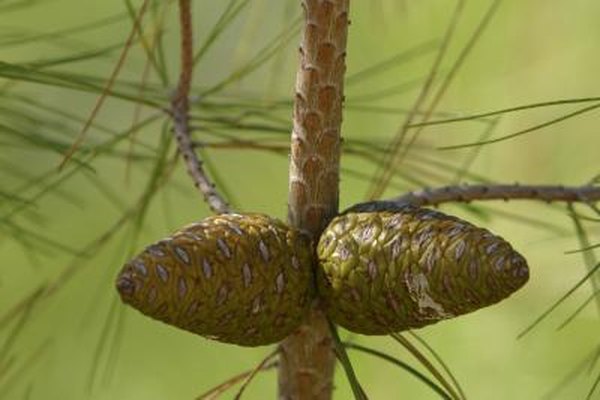
    • Immature female cone

      Pollen is produced by the male cone. A grain of pine pollen contains the genetic information from the pine tree on which it hangs. Each grain of pollen is equipped with two small wing-like structures that help the pollen become aloft in the air and promote a wide distribution. The grain of pollen then finds its way to a receptive female cone, which appears to be solid and hard. Once the pollen lands on the cone, it grows a long thin tube into the center of the cone where the egg is located. There, the genetic information in the pollen grain is combined with the genetic information in the egg, and a fertilized embryo results. As time passes (usually about two years), the embryo grows into a seed and the cone becomes brown and develops scales. It is at this time the pine cone resembles the familiar cones seen littering the forest floor. If one of the pine cone's scales is pulled off, a mature seed can be seen at the base. If planted, this seed will grow into a pine tree.

    Seed Dispersal
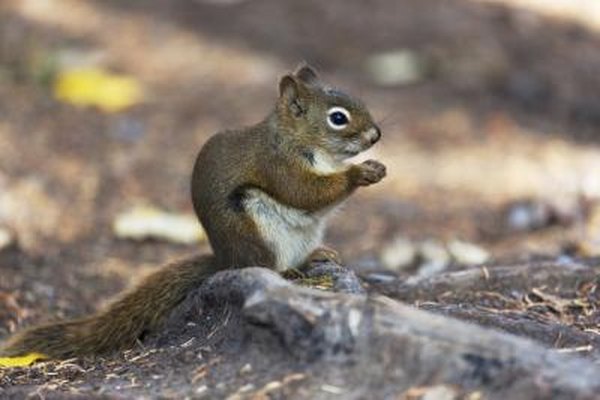
    • Because plants are immobile, it is important that they have ways to disperse their pollen and seeds away from the parent plant to minimize inbreeding. The winged pollen that pine trees have helps this dispersal. Various animals such as squirrels and jays commonly eat pine seeds and disperse them. Pine nuts (seeds) also are becoming a large part of human cuisine (although humans do not disperse these seeds, obviously). Because animals do not eat all species of pine cones, some species have developed unique ways to prevent inbreeding. Some pine cones remain tightly closed until they reach an extremely high temperature, as would be present in a forest fire. Only when these cones are heated do they release their seeds, which corresponds to the likely death of the parent plant in the fire.

Related Searches:

References

  • Photo Credit Wikimedia Commons

Comments

You May Also Like

  • Do Pine Trees Reproduce Asexually?

    Once an ovule in a female cone has been pollinated, the megasporocyte hidden inside will begin to divide and develop into a...

  • What Kind of Seeds Grow on Pine Cone Trees?

    Trees that grow pine cones are in a family called conifers, which grow needle-leaves and tubular cones to hold seeds. Pine trees...

  • How Do Plants Reproduce?

    Plants reproduce by either dropping seeds, cloning the plant bulb through asexual reproduction or with the help of animals that transfer pollen...

  • How Do Nut Trees Disperse Their Seeds?

    Squirrels go nuts for nuts because nature designed the quirky creature to be an effective seed dispersal unit. Of course, nature engineered...

  • What Are Seeds of Pine Trees & How Do They Reproduce?

    Pine trees belong to the conifer division and a classification of plants known as gymnosperms. Unlike flowering plants, gymnosperms produce exposed seeds....

  • How Do Coniferous Plants Reproduce?

    Coniferous plants reproduce by forming seeds inside of pine cones, which are spread throughout the forest by the wind and animals. Find...

  • How Tall Do Pine Trees Grow?

    Pine trees, native to North America and other continents, are distinctive evergreen trees known for their pine cones and needles. There are...

  • Parts of the Pine Cone

    Gymnosperms are plants that produce uncovered seeds in a cone. Conifer trees such as pines, firs, spruces, and balsams are all gymnosperms....

  • What Do Pine Tree Seeds Look Like?

    A coniferous plant produces one or more seeds in a cone structure. Cones come in many forms, from the soft, red berry-like...

  • How Do I Grow Pine Trees?

    Pine trees (Pinus spp.) are evergreen conifers growing throughout North America. These conifers are available in many different shapes and sizes. They...

  • How to Grow a Pine Tree From Seed

    You can grow your own pine trees using pine seeds, also called pine nuts, which you have harvested from cones. See Resources...

  • Types of Pines & Pine Cones

    Types of Pines & Pine Cones. Pines are conifers, meaning they produce seeds in cones that are then released and dispersed by...

  • How to Extract Pine Tree Seeds

    Pine trees reproduce by growing seeds inside pine cones. Once the cones open in late fall, the seeds naturally fall out. Each...

  • Do Pine Trees Have Pollen?

    Pine trees (Pinaceae sp.) rely on seeds for reproduction. This means that pine trees use sexual reproduction to produce seeds. Part of...

  • How Fast Do Pine Trees Grow?

    You can plant pine trees as a windbreak or just a decorative part of the landscape. Pine trees grow to heights of...

  • Two Ways Seeds & Pollen Are Dispersed

    Plants evolved from primitive green algae millions of years ago. Over time, plants adapted to land by developing various characteristics and functions...

  • Name of Pine Trees That Produce Small Pine Cones

    Name of Pine Trees That Produce Small Pine Cones. Pine trees grow in forests throughout the Northern Hemisphere. Their cones, which come...

  • How to Get a Pine Tree From a Pinecone

    Growing a pine tree from a pine cone is possible, but takes patience and time. Pine cone seeds require months of germination...

  • Common Legends of Red Pine Trees

    Common Legends of Red Pine Trees. The red pine, the state tree of Minnesota, is native to North America. The evergreen plant...

Related Ads

Featured