eHow launches Android app: Get the best of eHow on the go.

How Does

Color & Light Effects on Photosynthesis

Contributor
By Kristie Karns
eHow Contributing Writer
(0 Ratings)

    Bright Light Affects Photosynthesis

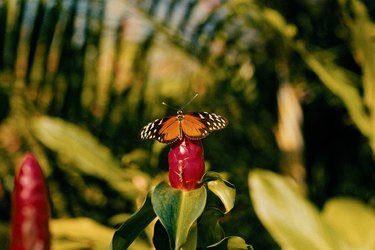
  1. Bright light is a basic element of photosynthesis, but variations in the color of light have an effect on plants. The entire spectrum of light hits the plant's leaves at the same time, but there are some colors that are known to cause higher amounts of photosynthesis than others. Chlorophyll is the cause of each plant's individual coloring and there are four kinds of pigments that create the chlorophyll. They are called Chlorophyll A, Chlorophyll B, Xanthophyll, and Carotene. Some leaves have more of a certain color pigment than they have of others, creating leaves that are bright green, blue-green, yellow-green or even orange or red. This pigmentation makes no difference with photosynthesis.
  2. Different Color Light Affects Plants Differently

  3. The color that has the highest influence on photosynthesis is blue, which is why many plant growers use blue lights to grow indoor plants. Red light is next best for photosynthesis and yellow light creates the lowest amount of light absorption. When tests are done on photosynthesis rates it is crucial to create an experiment where natural light cannot touch the leaf that is being exposed to differing colors of light. Any light that is not a part of the experiment itself should be carefully screened from the experimentation area. An absolutely dark room is essential and the use of white light as a control for the experiment is needed because white light is also a part of the spectrum of variants and serves for a control element in the experiment.
  4. Adequate Lighting and Plant Growth

  5. If a plant does not receive adequate light it will attempt to reach the light by growing taller. This results in a taller yet paler plant compared to other specimens of the same species that did receive adequate light from the time they sprouted until they began to leaf out. If you place a bucket upside-down over the top of a young plant and leave it that way, the result will be a very tall and usually bent over plant with very unnaturally pale coloring. When it is exposed to sunlight, however, the same plant will adapt to its new environment and begin to produce more chlorophyll through photosynthesis from sunlight.
Resources

Post a Comment

Post a Comment Post this comment to my Facebook Profile

eHow Article: Color & Light Effects on Photosynthesis

Related Ads

Home & Garden
Ruby Bayan,

Meet Ruby Bayan eHow's Home & Garden Expert.

Get Free Home & Garden Newsletters

Copyright © 1999-2009 eHow, Inc. Use of this web site constitutes acceptance of the eHow Terms of Use and Privacy Policy.   en-US Portions of this page are modifications based on work created and shared by Google and used according to terms described in the Creative Commons 3.0 Attribution License.

eHow Home and Garden
eHow_eHow Home and Garden