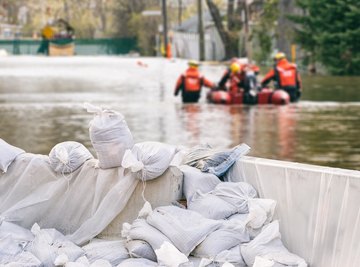

Floods are dangerous and costly events that are naturally occurring. They can also be caused by the over-development and transformation of land by people. Flooding can occur during frequent and intense rainfall. Other factors play a part in floods as well, like ground cover, condition of the soil and topography of the landscape. The American Red Cross states that around 90 percent of damage caused by natural disasters is due to flooding and the debris it carries. Floods cause an average of 100 deaths each year in the U.S. alone.
Flood Seasons
Flooding is common throughout many areas within the United States and can be prevalent during particular times of the year in the particular areas. Though there is no specific flood season, most flooding occurs in the U.S. from spring to fall. Flooding is also more likely to occur in areas which have seasonal rainstorms, flood-prevalent topography like desert topsoil or a location along the coast.
Early Spring
During early spring, areas near to locations that had received heavy snowfall during the winter are at risk for flooding, such as areas at the foot of snow-laden mountains. The snow melt caused by the warmer temperatures can overwhelm streams and ditches if excessive amounts of snow fell in during the winter months. Human development can worsen the problem by removing or covering water-absorbing soil and vegetation for things like roads and buildings.
Spring and Summer
Seasonal thunderstorms during the spring and summer months can bring heavy rain to many areas throughout the U.S. and cause severe flooding. Areas like the southwestern United States are affected by seasonal monsoon storms during this time of year. Flash floods, or rapid flooding that can develop in a few hours or even minutes, are typical in some areas during this season.
Summer and Fall
Coastal and nearby inland areas can be affected by flooding during this time of year due to seasonal tropical storms. Areas like Florida, Georgia, Louisiana and Texas are often hardest hit by this type of seasonal weather. Often forming severe hurricanes and creating disasters on the national level, these areas fight seasonal battles with the intense storms.
About the Author
After completing his college screenwriting studies David Slate began work with an animal welfare organization creating educational materials. Then traveling abroad, he taught English in Prague for two years. In 2005 he moved to New York City and works in media production as a fine artist and designer. Also a playwright, his short works have been in local New York City festivals.