
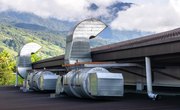
A flow switch is a device that monitors the flow of air, steam or liquid. It sends a "trip signal" to a different device in the system, such as a pump. The flow switch can indicate to the pump to shut off or to turn on. Some of the general uses are for pump protection, for cooling-circuit protection and alarms for too high or too low flow rates.
Uses
An example of what flow switches can be used for is given by McDonnell & Miller, suppliers of liquid and air flow switches. Liquid flow switches can be used for air conditioning, hot water space heating systems, pump systems, water cooled equipment, blending or additive systems, liquid transfer systems, fire sprinkler systems, water treatment systems, swimming pool chlorination and industrial laser coolant systems. Air flow switches can be used for clean room filter systems, duct type heating, exhaust ventilating, air supply systems and air treatment systems.
Flow Definition
Flow means the physical movement (velocity) of liquid, gas or steam in a pipe that causes a switch to actuate. No-flow means a decrease in velocity or, sometimes, complete stoppage, allowing the switch to revert to the original position.
Function
A flow switch can perform specific functions based on need. For example, it can stop a motor when no flow is present, start a motor when a flow is present, sound an alarm when the flow stops or shut off an alarm when the flow is appropriate.
Considerations
For liquid flow, measuring the flow rate is inferred by calculating “the liquid's velocity or the change in kinetic energy," according to Seil Enterprise Company. "Velocity depends on the pressure differential that is forcing the liquid through a pipe or conduit. Because the pipe's cross-sectional area is known and remains constant, the average velocity is an indication of the flow rate." The flow rate needs to be determined to set the flow switch to the pre-determined close function.
Types
According to the Instrumart website, several different types of flow switches can be found. A vane-operated flow switch utilizes the fluid pushing against a paddle in the liquid flow. When flow drops below pre-set levels, it triggers, according to the site, "an internal magnetic coupling and mechanical switch actuation lever" which trips the switch. A variable area flow switch uses several methods to activate the switch, which has an internal piston. Flow comes into a port, creating pressure against a magnetic poppet. When the flow pressure reaches a set level, the switch closes. An ultrasonic (Doppler) flow switch is attached to the outside of the pipe. It uses ultrasonic sensors to send an ultrasonic signal when a change in flow is detected. A thermal dispersion flow switch is a probe that measures the difference in temperature of the liquid or gas as its passes sensing elements and triggers a signal when a change is detected.
References
About the Author
Debbie McRill went from managing a Texas Department of Criminal Justice office to working for Compaq and Hewlett-Packard as a technical writer and project manager in 1997. Debbie has also owned her own businesses and understands both corporate and small business challenges. Her background includes Six Sigma training, and an Information Development career with journalism and creative writing as her passion.
Photo Credits
oil rig at sunset image by Alan James from Fotolia.com