

Venting Problems With Gas Hot Water Heaters

Your water heater relies on more than gas to operate; it also relies on air. After the gas burns, the hot water heater searches for something to do with the fumes, which is where proper ventilation comes in. Always shut off the gas when inspecting the unit or attempting to troubleshoot problems because gas is highly combustible.
Why Ventilation Is Important
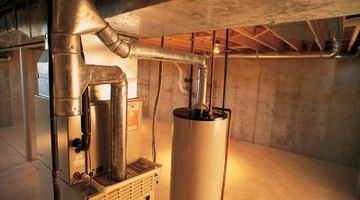
The residual gas fumes from your water heater’s burn process must be drawn through the vent pipes and up the chimney to exhaust outdoors. When that isn’t happening properly, the results could be costly -- or worse, extremely dangerous. Learning to troubleshoot problems is a good thing, but trying to fix the problems yourself may not be a good choice. You need to be aware of ordinances and regulations about water heaters, and fix yours in accordance with local ordinances.
Clogged and Blocked Vent Pipe
A clogged or blocked vent pipe can present a load of problems. If you don’t know which pipe is which, you need to know how to identify the vent pipe, which is typically about 3- or 4-feet long and extends from the top of the water heater and connects to your chimney flue system. If your vent pipe is clogged or blocked and you feel comfortable with troubleshooting, turn off the water heater and the gas supply, unscrew a section of the vent pipe and visually inspect the inside for blockage, such as dust and debris. Take a wire brush, remove the blockage and screw the section back.
Fume Hood Downdraft
The fume hood is a metal piece at the base of the vent pipe on top of the water heater that flares outward like a skirt and allows heated combustion gases to combine with air so the gas is drawn up through the vent pipe and exhausted through your chimney. If you cannot feel air being sucked and drawn upwards, that's indicative of a venting problem. A down draft requires attention from an HVAC specialist.
Pilot Light Goes out
Clogged vents can also trigger pilot light problems by making the thermocouple or gas valve malfunction. The thermocouple is a safety device that works together with the pilot light and the gas valve. If the thermocouple senses that the pilot light is not on, it prevents the gas valve from turning on to release gas, and consequently the pilot will not light.
Burner Does Not Stay Lit
Once again, clogged vents are often the cause if the burner will not stay lit. Essentially, the same problems are taking place that happen with the pilot light in that the thermocouple is getting a bad signal and stopping the gas valve from working properly. And in most cases, clogged vents are the cause.
Recalled Plastic Vent Pipes
High-temperature plastic vent pipes were sometimes used with heating units installed between 1987 and 1993. The FTC has recalled all of this type of piping. If you have an older water heater with plastic vent pipes, you must replace them with stainless steel, which may also require installation of a draft-inducing fan near the vent outlet to create the proper draft. Hire a professional to inspect your older water heat and make the appropriate replacements.
References
Writer Bio
Cheryl Munson has been writing since 1990, with experience as a writer and creative director in the advertising industry. She holds a Bachelor of Arts in journalism with a focus on advertising from the University of Wisconsin in Madison.
Photo Credits
- Comstock/Comstock/Getty Images
More Articles

