How Is a Canyon Formed?

How Is a Canyon Formed? thumbnail
How Is a Canyon Formed?
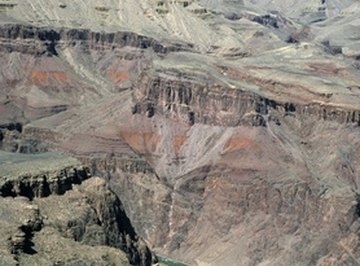
    • A canyon is a deep cut in the earth with steep sides and a relatively small bottom. While canyons can be massive in size, the size of the canyon bottom is generally extremely small when compared to the height of the sides. When compared to what's typically called a "ravine," canyons are typically much deeper and difficult to access. A canyon is a steep gorge with high sides and a minimal valley floor. While some consider a canyon to be a formation equal to a valley, the two aren't actually interchangeable. Canyons are significantly steeper than valleys. One of the most noted canyons in the world is the Grand Canyon in the United States.

    • Much like valleys, canyons are generally formed strictly through erosion. Typically formed by rivers, a few are also caused by massive movement of the Earth's tectonic plates. The two canyon types are similar, but do differ in their general form. Typically, a canyon forms when a river's course begins eating away at the underlying rock strata. As the water flows, it carries away much of the material making up the canyon's floor. As the water continues along its course, the canyon becomes deeper and deeper. The further the canyon progresses and the deeper it gets, the faster the erosion process becomes. The reason for this is that the canyon walls begin acting as a sluice, channeling the force of the water into a progressively smaller area.This is why canyons tend to be much wider at the top than they are at the bottom. The steeply sloping sides are caused by the water carrying dirt and rock away from the canyon walls, toward the far end of the river's course. As the canyon walls attain a greater surface area, they also pick up erosion from wind and rain, as well. As the canyon grows deeper, the exposed rock strata becomes more pronounced and the underlying geography of the area becomes visible.

    • The canyon walls are typically visible as layers of rock strata. Because the harder rock wears away significantly slower than the softer materials, the hard rock of the canyon walls is more readily visible along the canyon walls. Geologists study these rock strata to track geological events through the ages. These rock strata can assist geologists in tracking the progression of ice ages and other geological phenomena.

Related Searches:

Comments

You May Also Like

  • What Are Canyons?

    Canyons are like grooves formed in the Earth from water erosion. The most famous of the world's canyons is the Grand Canyon...

  • How to Sell Gold Canyon Candles

    A home essentials, aromatherapy, and gift company, Gold Canyon allows people to sell its wares from the comfort of their own homes....

  • How to Enjoy the Grand Canyon in Yellowstone

    There is more than one Grand Canyon in the United States. We may think first of the Grand Canyon in Arizona. But...

  • How to See the Grand Canyon

    The Grand Canyon, located in the Colorado Plateau of Arizona, is one of the most beautiful and most visited sites in the...

  • Types of Canyons

    A canyon is a deep, rocky formation caused by a fast-moving river that deepens the canyon, leaving steep cliff-like sides ending at...

  • How to Make a Canyon Mountain Diorama for Kids

    Use a 2-liter soda bottle to form the top of the highest mountain peak. Smaller peaks are formed over bottles that have...

  • Purpose of the Glen Canyon Dam

    The Glen Canyon Dam, like most major dams in the United States that form large reservoirs, serves more than one purpose. The...

  • How the Sierra Nevada Mountains Were Formed

    In geological terms, the Sierra Nevada Mountains are a young mountain range. The groundwork for these mountains was laid during the age...

  • Copper Canyon in Mexico

    The Copper Canyon area consists of 20 canyons that were formed by six wide rivers. The Copper Canyon region is seven times...

  • Why Do Ice Crystals Break Rocks?

    Water and its cold-weather companion, ice, are a part of the natural system of weathering and erosion. Together, weathering and erosion help...

  • What Is the Volume of the Grand Canyon?

    The Grand Canyon is perhaps the most famous natural feature in the United States. Although some sources mistakenly refer to it as...

  • Description of the Grand Canyon

    Considered among nature's most spectacular offerings, the Grand Canyon is one of the most popular tourist destinations in the world, averaging over...

  • Location of Copper Canyon

    The Copper Canyon (La Barranca del Cobre) district is along the shared borders of the Mexican states of Chihuahua, Sonora and Sinaloa...

  • How Big Is Mars Compared to Earth?

    Mars is called the "red planet" because of the iron-oxide dust that gives it the red color. The fourth planet from the...

  • How to Go to the Grand Canyon

    Long considered one of America’s premier natural attractions, the Grand Canyon offers a variety of ways to see and enjoy the beauty...

  • Facts on the Grand Canyon in Arizona, USA

    The Grand Canyon cuts into the Colorado Plateau, and is said to have formed approximately six million years ago due to the...

  • About The Grand Canyon

    The Grand Canyon is a massive canyon carved into the desert in northern Arizona. The Grand Canyon National Park was one of...

  • How to Plan a Visit to the Grand Canyon

    U.S. News Rankings and Reviews lists the Grand Canyon as the premier choice for a United States family vacation. Described as "the...

Related Ads

Featured