

How to Disinfect Colored Laundry

Colored laundry presents a challenge when disinfecting because the standard disinfectant, chlorine bleach, is a poor choice. Chlorine bleach can damage colored laundry.
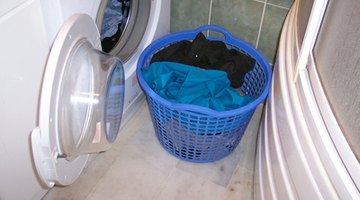
Very hot water, over 160 degrees, is also an adequate disinfectant for clothes, but hot water can fade colored clothes or make the dye run to other clothes in the laundry. The experts at the Clorox bleach company say that there are no products available for safely disinfecting clothes while preserving color. However, the Centers for Disease Control and Prevention disagrees, and says that common sense hygienic practices are all that is needed for keeping germs to a minimum when doing laundry.
Things You Will Need
- Laundry detergent
- Borax
Tip
If you are still concerned about germs, wash the items again, which will further decontaminate the items. Although the CDC says that regular laundry practices are adequate for germ removal, you can add 80% pine oil to your laundry for further disinfecting.
Warning
Follow all product labels for proper wash and care instructions.
-
Separate your laundry for the loads you wish to wash. If you do not want to cross-contaminate germs, wash heavily soiled laundry separately. For example, if some of your laundry contains feces, only wash those items together.
-
Begin to fill your washing machine using the hottest water acceptable according to your clothing labels.
-
Pour in the laundry detergent and borax according to the label on the package for your laundry load.
-
Run your washing machine following the manufacturer’s instructions.
-
Dry your clothes on the highest heat setting allowable according to your clothing labels. The heat will help kill germs and continue to disinfect your laundry.
The Drip Cap
- Colored laundry presents a challenge when disinfecting because the standard disinfectant, chlorine bleach, is a poor choice.
- Very hot water, over 160 degrees, is also an adequate disinfectant for clothes, but hot water can fade colored clothes or make the dye run to other clothes in the laundry.
- Begin to fill your washing machine using the hottest water acceptable according to your clothing labels.
References
Writer Bio
Holland Ember has been a writer for eight years focusing on technical writing and specializing in environment, health and social sciences. She has a Bachelors of Arts in journalism and a Bachelor of Arts in anthropology from the University of Oklahoma. Ember has written for eHow and also edits academic and scientific journal articles.
Photo Credits
- laundry image by timur1970 from Fotolia.com
- laundry image by timur1970 from Fotolia.com
More Articles

