The greenhouse effect refers to the retention of heat in the atmosphere by greenhouse gases, including water vapor, carbon dioxide, methane and nitrous oxides. Due to increasing levels of greenhouse gases in the atmosphere - partially as a result of human industrial activity - progressively more heat is being trapped, resulting in a phenomenon commonly referred to as global warming. Global warming specifically refers to the rise in average global surface and ocean temperatures.
The difference between greenhouse effect and global warming is that the greenhouse effect is one of the causes of global warming, while global warming indicates the rise of global average temperatures.
Global Warming vs. Greenhouse Effect
The greenhouse effect occurs as light is absorbed by the surface and oceans of the Earth, transformed into heat, and reradiated as infrared radiation. Certain components of Earth's atmosphere - the greenhouse gases - absorb the heat, and once again reradiate it in all directions. The continuous process of absorbing and radiating heat serves to retain the heat in the atmosphere, reducing the amount of heat sent back into space.
Under normal circumstances, the natural greenhouse effect helps moderate temperatures on Earth's surface, and keeps the planet warm enough to sustain life. The rapid increase in greenhouse gases during the twentieth century has created an enhanced greenhouse effect, contributing to global warming.
Increasing Greenhouse Gases
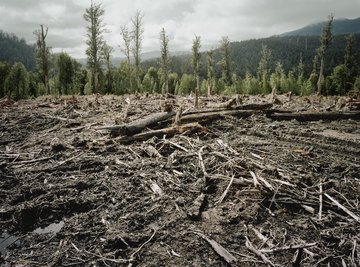
Most mainstream scientists support the notion that increasing levels of greenhouse gases in the atmosphere are a result of human activity. The burning of fossil fuels and deforestation are two activities that increase concentrations of carbon dioxide in the atmosphere. Deforestation destroys large numbers of trees which would otherwise remove carbon dioxide from the air to produce oxygen.
According to measurements taken at the Mauna Loa Observatory in Hawaii, the concentration of carbon dioxide in the atmosphere has risen to over 410 ppm (the highest in over 400,000 years), with most of the rise attributable to burning fossil fuels. Rising temperatures can create synergistic processes that lead to even more warming, increasing water vapor in the atmosphere or releasing methane from the arctic.
Global Warming
Data from human records, tree rings, corals and other sources show that average global temperatures rose by 0.41 degrees Celsius (0.74 degrees Fahrenheit) during the twentieth century, with the increase accelerating in the second half of the century. Climate models indicate that temperatures are likely to rise one more degree during the twenty-first century.
Temperature changes vary widely over the planet, with larger changes occurring over land than over ocean. Some scientists suggest that climate change may result in cooling in some areas, as ocean and air currents change, and increased ocean evaporation results in cases of heavy localized snowfall.
Effects of Global Warming
There are many reasons to be concerned about the impacts of global warming. Rising temperatures are likely to result in widespread ecological change. Many animal and plant species may become extinct as ecosystems adjust to climate change. While adaptable species will survive, and others will migrate, the end result will be lost biodiversity.
For example, many tropical corals require very specific temperatures to survive. As ocean temperatures increase, the added heat causes stress to the coral, resulting in the damaging coral bleaching effect. In coral bleaching, corals expel the symbiotic algae that help them survive and give them color. When this happens, the coral turns completely white, giving it a "bleached" appearance.
Global warming also has potential to melt ice caps, raise sea levels and displace human populations due to coastal flooding and droughts. Melting ice caps also impact native species that rely on the pack ice in the polar regions, such as polar bears, walruses and seals. The planet has already been experiencing heightened occurrence and severity of heat waves and extreme weather events, which may become worse as the climate becomes more destabilized.
References
Resources
About the Author
Scott Johnson has spent over 10 years as President of Interactive Composition Corporation, a publishing services company with offices in Portland, Oregon and New Delhi, India. Johnson's areas of expertise include business process outsourcing, international business, finance and investing. He holds a Bachelor of Arts in government from Cornell University.