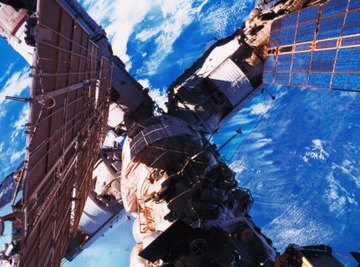

People often assume that astronauts in zero gravity are simply having a lot of fun. After all, you can fly around effortlessly almost as if you were having a dream about flying. While there are many advantages to weightlessness, there are also some dangers associated with this enjoyable experience.
Fun in Space
Zero gravity means you can float in the air without having to use any energy to support your weight. As long as this situation endures, you won't have to worry about back pain and sore feet. You can move yourself around just by pushing off from a surface. Once you are in motion, you won't have to use your body to keep moving. Your velocity remains constant after you set yourself in motion.
Bone and Muscle Loss
The disadvantages of zero gravity include bone loss, which is one of the most serious side effects of long-term weightlessness. The stress of Earth’s gravity is what keeps bones strong. In space, or any weightless environment, bones undergo little, if any, stress. Over time, the bones begin to deteriorate. Worse, scientists have figured out how to recuperate only some of the bone loss after astronauts return from long space voyages. There also is a similar loss of muscle.
Fluid Redistribution
With no gravity pooling blood and other fluids in the lower parts of your body, fluids redistribute throughout your anatomy. The brain interprets this as a high fluid level and causes you to excrete more fluids. This can easily lead to dehydration, a constant concern for astronauts.
Space Adaptation Syndrome
Space adaptation syndrome, also known as space sickness, is caused by the immune system becoming weakened in a zero gravity environment. About half of astronauts complain of this syndrome’s symptoms, which include nausea and headaches. It typically lasts for a few days.
Inhaling Things
What many people do not consider is that everything else is floating around as well. If fellow astronauts are not extremely careful, you might be hit by objects not properly secured. It is easy for an astronaut to inhale particles of food or water that float past. Astronauts even have to use special electric razors equipped with vacuums so that they don’t inhale their own whiskers and choke.
Balance Disorders
After returning to Earth, many astronauts suffer balance disorders. This is due to disorientation in the inner ear, which controls balance. Many returned astronauts suffer from dizziness for days and cannot keep their balance. This leaves them somewhat incapacitated until they regain a sense of equilibrium.
References
About the Author
Robert Paxton has been writing professionally since 2002 when he published his first novel. He has also published short stories and poems and writes ad copy for various websites. He graduated from the University of Arizona in 1995 with a bachelor's degree in creative writing. Paxton is a trained Montessori instructor who has taught at both the elementary and the secondary levels.
Photo Credits
Stockbyte/Stockbyte/Getty Images