Metal work requires special tools to join two pieces together, which is where a spot welder comes into place. This type of resistance welding is an old yet effective method depending on the project. Understanding how it works helps you figure out if spot welding will work for your project.
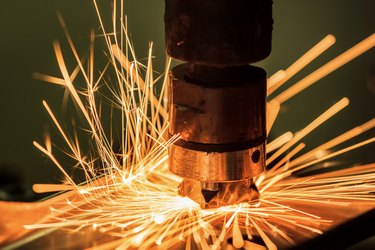
What Does Spot Welding Do?
The goal of spot welding is to permanently attach two separate pieces of metal. The welding takes place at specific points, which are circular points. This type of welding is often used in the automotive industry to create the actual body of the vehicle by spot welding metal together. Other common uses include aerospace, metal furniture and electronics.
Video of the Day
Video of the Day
How Does It Work?
Spot welding works through conductive heating, which is created by an electrical current. Classic spot welding positions two copper alloy electrodes, which hold the two pieces of metal together. Copper offers high thermal conductivity with low electrical resistance, making it an ideal way to focus the heat into the metal instead of in the electrodes themselves. The electrical current flows through the electrodes, creating concentrated heat to melt the metal. The melting causes the two pieces of metal to stick together in that spot.
The electrical current only runs for a short time because once the pieces of metal fuse together, the current is no longer needed. However, the electrodes continue applying pressure until the melted metal solidifies into a secure joint. Welds created through this process are typically between 3 and 12.5 millimeters in diameter, with the size affecting the strength of the joint created. The welds are repeated at regular intervals to effectively join the two pieces.
A similar process is seam welding, which uses the same resistance welding method. Instead of a shaped electrode that stays in one spot, seam welding uses wheel-shaped electrodes. The metal moves through those electrodes, which roll along the seam to create joints between the sheets of metal.
Materials That Work
You can use spot welding for a variety of metal materials, including sheets of metal and wire mesh. Steel is a top option because of a low thermal conductivity and high electrical resistance. Low-carbon steel is often the best choice, as higher carbon steels may become more brittle at the welds and be more prone to fractures or cracking. Stainless steel, titanium and nickel alloys also work well with spot welding.
Spot welding can be more challenging on other metals, including aluminum, which requires much higher levels of electrical currents to create welds. Galvanized steel also tends to need higher currents to weld properly using this technique. Zinc alloys, copper and copper alloys may also be more challenging to spot weld.
Material thickness is also a consideration. The ideal thickness is up to 3 millimeters, and the process works best when the two pieces being joined are the same thickness. If you're working with different thicknesses, the ideal ratio is no more than 3 to 1.
Pros of Spot Welding
Spot welding creates reliable results, forming welds that last. Because spot welding uses an electrical current running through electrodes, it doesn't require metal weld material. It's a quick process, which makes your projects run smoothly. The large amount of energy lets the weld happen without applying too much heat to other areas of the metal.
Cons of Spot Welding
This method of resistance welding doesn't work well for all types of metal, so it may limit the options on your projects. You also need a spot welding tool or a MIG or TIG arc welder fitted with the correct attachments, which can be expensive if you only need the tool for a small project. If the current or heat isn't strong enough, the joint may not hold well over time, so getting the correct settings is important. It can also be challenging to position the electrodes well on odd-shaped projects or in difficult-to-reach spots.