



In the 1920s, the United States went through a period of extreme social change. As the post-World War I economy boomed, mass consumerism changed the way people lived their lives -- and made manufactured goods available across the classes. As income disparity increased, the great divide between rich and poor ignited the labor debate, and as more people flocked to culture-rich cities, the racism inspired by groups like the Ku Klux Klan became more common in middle class America. Still, as economic and racial inequality scarred the '20s, the independent, free-spirited "flapper" became the enduring mascot for the entire decade.
Consumerism & The Middle Class
The economic boom of the '20s inspired a new level of consumerism in America. Increased production capabilities made luxury items affordable, and the introduction of credit made them easily attainable on any income -- giving rise to a middle class lifestyle. Household items like vacuums, electric washing machines and refrigerators made housework easier, and affordable vehicles made long distance travel possible. As credit-confident consumers raced to buy what manufacturers had to sell, consumer debt doubled by decade's end.
Income Disparity & Upper Class Growth
Though the '20s were marked by prosperity, income disparity was a big issue for the struggling lower class. UC-Berkeley economics professor, Emmanuel Saez, notes that in 1928, the top 1percent of families took home 23.9 percent of all income. The bottom 90 percent shared 50.7 percent of all income. Such income disparity experienced in an inflation economy further ignited labor disputes across the country. In 1920, the United Mine Workers called a nationwide strike for better pay and hours. In 1922, 400,000 railroad workers walked off the job following pay decreases. Neither were successful -- but both highlighted the decline in wage worker strength and increased upper class power seen in during the Roaring Twenties.
Racism & The Middle Class
As cities grew culturally diverse, racism increased. Using a platform that called for a return to "traditional values," the Ku Klux Klan grew substantially as it rebelled against the "city slicker" culture of the Jazz Age. As it targeted minorities and foreigners, and blasted bootleggers and motion pictures, the Klan appealed more than ever to mainstream, middle class Americans. By the middle of the decade, its membership swelled from three million to eight million members.
"Flapper" Lifestyle & Mingling Classes
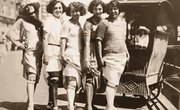
"Flappers" personified the independent, free spirited lifestyle chosen by many younger Americans in the 1920s. This mascot for the Jazz Age frequented jazz clubs, danced raucously, drank, smoked and mingled openly with the opposite sex -- as well as different classes. As flappers engaged in activities previously reserved for males only, they helped eliminate social double-standards and normalized casual dating between the classes. And for the first time, dating decisions were impacted less by wealth and more by personal qualities.
Related Articles




References
- History: The Roaring Twenties
- The University of Kansas: History of American Journalism: The 1920s
- U.S. History: Pre-Columbian to the New Millennium: Flappers
- U.S. History: Pre-Columbian to the New Millennium: A Consumer Economy
- Pew Research Center: FacTank News in Numbers: U.S. Income Inequality
- Encyclopedia of Alabama: Mining Labor
Writer Bio
Based in the Pacific Northwest and educated at the University of Washington, Rosanne Tomyn has been writing historical, cultural and political articles since 2005. Tomyn was awarded the International Labor Communicators Award for Best Profile and Best Labor History Story in 2011.