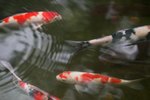
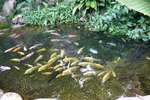
Biological filtration is the process of encouraging nitrifying bacteria to grow within an aquatic environment. These bacteria break down fish wastes by changing toxic ammonia in your fish's urine and feces to harmless nitrate. A basic biological filter for a pond has three components: the media inside your mechanical filter, the pond's substrate and aquatic plants.
Holes in the Ground
A biological filter isn't necessarily something you build: It's the end result of correct substrate, aquatic plants and, if necessary, a mechanical filter. Whether you need a mechanical component depends on the type of pond, and on its size and water volume. An artificial pond with a liner and without constant, natural surface disturbance needs mechanical filtration. A natural, spring-fed pond typically doesn't, because nature is already providing oxygen exchange and water cycling. However, natural ponds that are stagnant or very small also require mechanical filtration.
Pumping Action
If your pond is artificial, stagnant, or very small, include a mechanical filter with a biological filter medium, such as 1-inch to half-inch gravel or lava rock, or bio-balls. Submersible freshwater and saltwater aquarium pumps, swimming-pool rapid sand filters and sump pumps are possibilities. A pump aids biological filtration by forcing water through the medium, which is basically an enclosed bed of nitrifying bacteria.
Not Just a Bunch of Dirt
Your pond's substrate is a critical element of your biological filtration system. Several inches of gravel or lava rock provide ample surface area to support the bacteria and other microorganisms essential to your koi's long-term survival. Smooth gravel may be a safer option for fancy, long-finned breeds. Organic material such as driftwood or African root can also be a part of the bacterial bed.
Plant It Up
The final step in building a biological filter is to make sure you heavily stock your pond with aquatic plants. These provide the basis for a sustainable pond ecosystem. They breakdown wastes, fill the water with oxygen, introduce and support beneficial micro-organisms, and provide cover, shade, hiding places, tasty snacks and overall stress reduction for your koi.
References
Resources
Writer Bio
Angela Libal began writing professionally in 2005. She has published several books, specializing in zoology and animal husbandry. Libal holds a degree in behavioral science: animal science from Moorpark College, a Bachelor of Arts from Sarah Lawrence College and is a graduate student in cryptozoology.